Overview
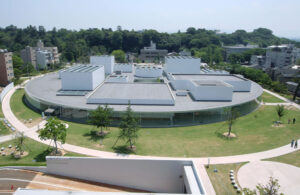
Located in the heart of Kanazawa, the 21st Century Museum of Contemporary Art is one of Japan’s most influential modern art institutions. Opened in 2004, the museum is internationally acclaimed for its innovative circular architecture, open-access concept, and strong emphasis on contemporary art that engages directly with visitors and the surrounding city.
Rather than functioning as a closed, monumental building, the museum was designed to be a “park for art”—a welcoming public space where art, architecture, and everyday life intersect.
Architectural Design and Concept
The museum was designed by SANAA (Kazuyo Sejima and Ryue Nishizawa), one of Japan’s most celebrated architectural practices.
Key Architectural Features
-
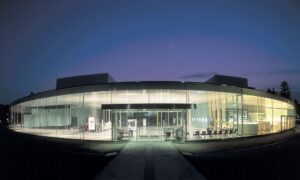
A perfectly circular structure, approximately 112 meters in diameter
-
Transparent glass exterior walls that blur the boundary between inside and outside
-
Multiple entrances on all sides, allowing visitors to enter freely from the city
-
Single-story layout that removes hierarchical movement through space
This design encourages openness, accessibility, and exploration, making the building itself a major work of contemporary architecture.
Museum Layout and Zones
The museum is divided into two main areas:
Free Public Zone
Accessible without a ticket, this area includes:
-
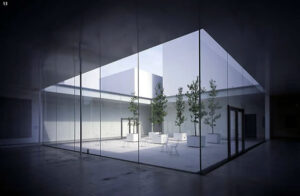
The central courtyard
-
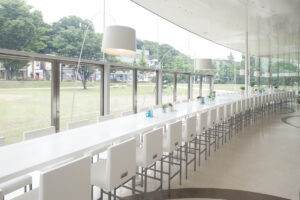
Museum shop and café
-
Community spaces and corridors
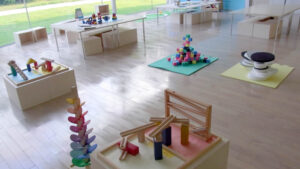
Many installations and architectural features can be enjoyed without entering the paid galleries, reinforcing the museum’s role as a civic space.
Paid Exhibition Zone
Ticketed areas house:
-
Permanent installations
-
Rotating special exhibitions
-
Video art, installations, sculpture, and mixed-media works
Exhibitions focus on global contemporary art from the late 20th century to the present.
Iconic Artworks and Installations
“Swimming Pool”
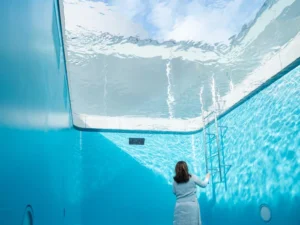
One of the museum’s most famous works is “The Swimming Pool” by Leandro Erlich.
This installation creates the illusion of people standing underwater by:
-
Placing a shallow layer of water above a transparent glass surface
-
Allowing visitors to view the space both from above and below
It is one of the most photographed contemporary artworks in Japan and often requires timed entry.
Permanent Collection Highlights
The museum’s permanent collection emphasizes:
-
Experiential and participatory art
-
Works that engage with perception, space, and time
-
Artists from Japan and around the world
The collection is carefully curated to complement the museum’s architectural philosophy.
Exhibition Philosophy
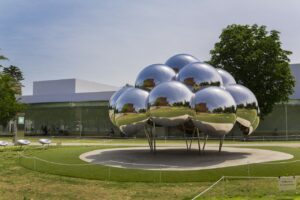
Unlike traditional museums that emphasize historical chronology, the 21st Century Museum focuses on:
-
Direct engagement with contemporary issues
-
Accessibility for visitors without art backgrounds
-
Interaction between artwork, architecture, and audience
Explanatory materials are available in English, making the museum approachable for international visitors.
Outdoor Spaces and Courtyard
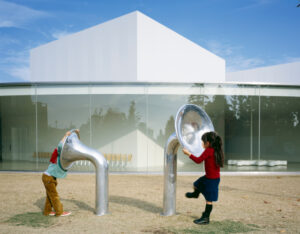
The open courtyard at the center of the museum functions as:
-
A resting space
-
An extension of exhibition areas
-
A venue for temporary installations
The surrounding lawns and plaza are popular with locals and visitors alike, contributing to the museum’s relaxed atmosphere.
Museum Shop and Café
The museum shop offers:
-
Art books and exhibition catalogs
-
Design-focused souvenirs
-
Items inspired by contemporary art and architecture
The café emphasizes light meals and desserts, making it an ideal break during museum exploration.
Location and Urban Context
The museum is located near Kanazawa’s major cultural landmarks, including:
-
Kanazawa Castle
-
Kenrokuen Garden
Its central location makes it easy to include in a full-day walking itinerary through the city.
Access
From Kanazawa Station
-
Approximately 10 minutes by bus
-
About 20–25 minutes on foot
Bus routes serving the museum are frequent and well-marked.
Admission and Visiting Tips
-
Tickets are required for special exhibitions and permanent installations
-
Some popular works require timed entry reservations
-
Weekends and holidays can be crowded, especially during major exhibitions
Visiting on weekday mornings is recommended for a quieter experience.
Best Time to Visit
-
Morning: Fewer visitors and better lighting for photography
-
Weekdays: More relaxed pace
-
Rainy days: The museum is an excellent indoor cultural destination
Seasonal exhibitions ensure that repeat visits offer new experiences.
Photography Policy
-
Photography is generally allowed in many areas
-
Some exhibitions restrict photography
-
Tripods are usually prohibited
Always check signage before photographing artworks.
Who Should Visit
-
Contemporary art enthusiasts
-
Architecture and design lovers
-
Travelers seeking modern culture alongside traditional Japan
-
Visitors interested in interactive and experiential art
Why This Museum Is Unique
What sets the 21st Century Museum of Contemporary Art apart is its:
-
Radical openness and accessibility
-
Seamless integration with the city
-
Focus on experience rather than explanation
It challenges conventional ideas of what a museum should be, making contemporary art approachable and engaging for a broad audience.
Conclusion
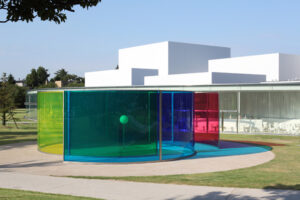
The 21st Century Museum of Contemporary Art, Kanazawa is not only one of Japan’s leading art museums but also a landmark of modern architecture and urban design. By combining world-class contemporary art with an inviting, transparent structure, it offers international visitors a memorable and intellectually stimulating cultural experience.
For travelers exploring Kanazawa, the museum provides a compelling contrast to the city’s historic temples, gardens, and samurai districts—highlighting the dynamic relationship between Japan’s past, present, and future.
Related articles

Official Website
I also share travel information and Japan travel updates on X.
X (formerly Twitter)
Recommended Travel Services
