Overview
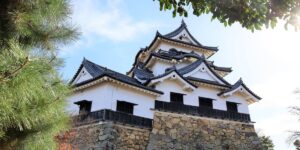
Hikone Castle is one of Japan’s most historically significant and best-preserved feudal castles. Located in Hikone City, Shiga Prefecture, on the eastern shore of Lake Biwa, it is one of only twelve castles in Japan that still retain their original main keep (tenshu) built before 1868. Even more importantly, it is one of just five castles designated as a National Treasure of Japan, placing it in the highest tier of cultural importance.
Constructed in the early 17th century, the castle served as the seat of the Ii clan, powerful daimyo (feudal lords) who governed the Hikone Domain during the Edo period. Its strategic position overlooking Lake Biwa and the surrounding highways made it politically and militarily significant.
Unlike many reconstructed castles in Japan, Hikone Castle’s main keep, gates, turrets, and stone walls are authentic structures from the Edo period, giving visitors a rare opportunity to experience genuine samurai-era architecture.
Historical Background and Architectural Features
Origins in the Early Edo Period
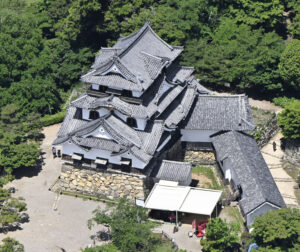
Construction of Hikone Castle began in 1604 under Ii Naokatsu, son of Ii Naomasa, a prominent general under Tokugawa Ieyasu. The castle was completed in 1622. Materials from other dismantled castles in the region were reused, a common practice during the consolidation of power under the Tokugawa shogunate.
The Ii clan remained lords of Hikone for more than 260 years, playing influential roles in national politics. The castle symbolized both their loyalty to the shogunate and their regional authority.
The Main Keep (Tenshu)
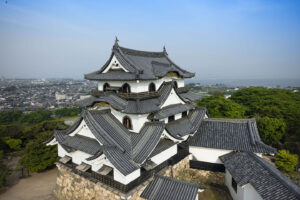 The three-story tenshu is relatively small compared to massive fortresses like Himeji Castle, but its compact and elegant design is a highlight. Key architectural features include:
-
White plaster walls contrasted with dark wooden beams
-
Irimoya-style gables (hip-and-gable roofs)
-
Ornamental shachihoko (mythical fish-like roof decorations believed to protect against fire)
-
Narrow staircases and steep interior ladders typical of defensive castle design
Inside, visitors can climb to the top floor. From there, panoramic views stretch across Lake Biwa, the surrounding city, and distant mountains. The interior preserves wooden floors, support beams, and defensive features such as loopholes for archers and gunners.
Stone Walls and Defensive Design
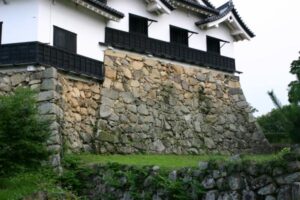 The castle complex is built on Mount Konki, a natural hill that enhances its defensive strength. Carefully constructed stone walls of varying heights surround the grounds. These walls are not merely decorative; their curved shapes and angles were designed to slow attackers and protect defenders.
Moats and multiple gates further reinforced security. The complex layout demonstrates how military strategy influenced architecture in feudal Japan.
Important Cultural Designations
Hikone Castle is officially recognized as:
-
A National Treasure (main keep)
-
A Special Historic Site of Japan
-
A location containing Important Cultural Properties
This status ensures ongoing preservation and careful maintenance.
Genkyu-en Garden and Surrounding Grounds
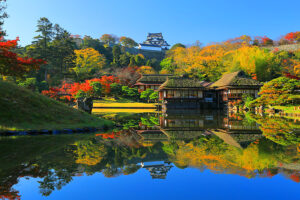
Genkyu-en Garden
Adjacent to the castle lies Genkyu-en, a traditional daimyo strolling garden constructed in 1677. Designed around a central pond, the garden incorporates miniature representations of famous scenic spots in Japan.
Walking paths circle the pond, offering constantly changing views of:
-
The castle keep rising in the background
-
Small islands and stone bridges
-
Seasonal flowers and trees
In spring, cherry blossoms frame the castle beautifully. In autumn, maple leaves provide vivid red and orange reflections in the water. The garden is especially popular with photographers.
Seasonal Highlights
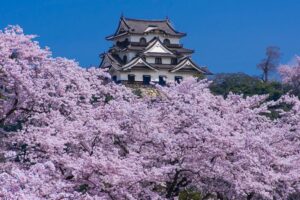 Hikone Castle is a year-round destination, but each season offers a different atmosphere:
-
Spring: Cherry blossoms bloom around the castle grounds, usually late March to early April.
-
Summer: Lush greenery surrounds the stone walls and garden.
-
Autumn: Brilliant fall foliage enhances the castle’s dramatic silhouette.
-
Winter: Occasional snowfall creates a serene, traditional landscape rarely seen at reconstructed castles.
Visitor Experience and Practical Information
What to Expect Inside the Castle
Visitors should note:
-
Shoes must be removed before entering the main keep.
-
The interior staircases are steep and narrow.
-
Large bags may need to be stored before entry.
Because the structure is original and historic, it is not fully barrier-free. Visitors with mobility concerns should be aware of the steep climb to the top.
Estimated Visiting Time
Allow approximately:
-
60–90 minutes for the castle keep and grounds
-
An additional 30–60 minutes for Genkyu-en Garden
History enthusiasts may wish to spend longer exploring the exhibits and architectural details.
Access
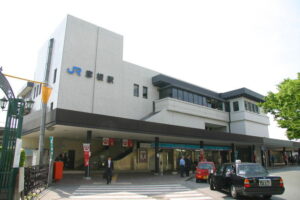 Hikone Castle is accessible from JR Hikone Station. From Kyoto or Osaka, travel via the JR Biwako Line. The castle is about a 15-minute walk from the station.
The location near Lake Biwa also makes it convenient to combine with other sightseeing in Shiga Prefecture.
Admission Fees and Hours
Hours and fees vary slightly by season, so visitors should check the official website before visiting. Combination tickets are available for both the castle and Genkyu-en Garden.
Cultural Significance and Why It Matters
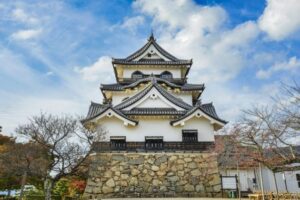 Hikone Castle is not simply a scenic landmark; it is an authentic survival from Japan’s samurai era. Many castles across Japan were destroyed during wars, fires, or the Meiji Restoration. Hikone’s survival provides an invaluable window into 17th-century political power, architectural engineering, and daily life in a feudal domain.
The castle also symbolizes the legacy of the Ii clan, whose members played key roles during pivotal transitions in Japanese history, including the late Edo period and the opening of Japan to the West.
For international travelers seeking more than a reconstructed façade, Hikone Castle offers something rare: a genuine, original feudal stronghold with centuries of uninterrupted history.
Its manageable size, authentic structures, scenic lakeside setting, and beautifully preserved garden make it one of the most rewarding castle visits in Japan.
Related articles
Official Website
https://visit-omi.com/poi/article/hikone-castle/
I also share travel information and Japan travel updates on X.
X (formerly Twitter)
