Overview
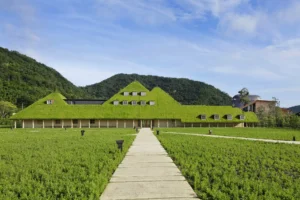
La Collina Ōmihachiman is a distinctive confectionery complex and architectural landmark located in Ōmihachiman, Shiga Prefecture. Set amid rolling hills near Lake Biwa, La Collina blends sweets, nature, and contemporary design into a single immersive destination.
Operated by the long-established Japanese confectionery company Taneya, La Collina is not merely a shop, but a carefully curated environment where visitors experience Japanese aesthetics, craftsmanship, and seasonal awareness through architecture and food.
Concept and Philosophy
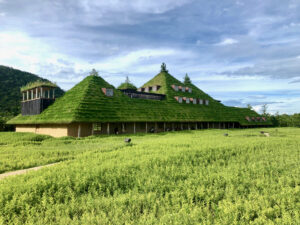
“La Collina” means “the hill” in Italian, reflecting the site’s gentle landscape and its philosophy of harmony between human creation and nature.
The concept emphasizes:
-
Coexistence with the natural environment
-
Respect for seasonal cycles
-
Craftsmanship rooted in tradition but expressed through modern design
Rather than constructing a typical commercial facility, the creators designed La Collina as a living landscape where buildings appear to grow out of the earth itself.
Architecture and Design
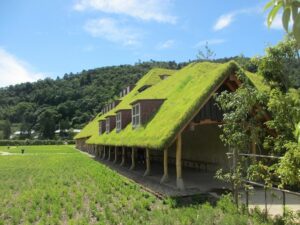
The most striking feature of La Collina is its architecture, designed by renowned Japanese architect Terunobu Fujimori.
Key architectural elements include:
-
Grass-covered rooftops planted with living vegetation
-
Curved, organic building forms
-
Extensive use of natural materials such as wood, clay, copper, and stone
-
Large windows that frame views of the surrounding countryside
The buildings change subtly throughout the year as grass grows, flowers bloom, and colors shift with the seasons, making repeat visits especially rewarding.
Main Buildings and Areas
Main Shop and Café
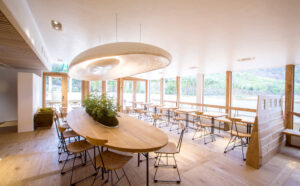
The central building houses:
-
A confectionery shop selling Taneya and Club Harie products
-
A café offering freshly made sweets and drinks
Visitors can observe the baking process through open kitchens and glass walls, reinforcing transparency and craftsmanship.
Club Harie Baumkuchen Shop
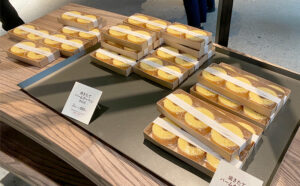
La Collina is particularly famous for baumkuchen, a German-origin cake that has become a Japanese specialty.
The on-site bakery produces:
-
Freshly baked baumkuchen with a soft, moist texture
-
Seasonal and limited-edition variations
The aroma of baking cake fills the space, enhancing the sensory experience.
Gardens and Walking Paths
The grounds include:
-
Gently sloping paths through fields and gardens
-
Seasonal flowers and native plants
-
Open spaces designed for strolling rather than hurried movement
The outdoor areas are integral to the experience and encourage visitors to slow down and engage with the environment.
Sweets and Culinary Experience
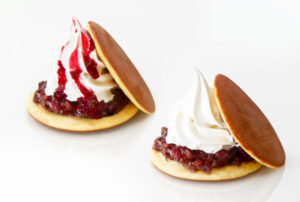
La Collina showcases both traditional Japanese and Western-style sweets.
Highlights include:
-
Wagashi made with red bean paste and seasonal motifs
-
Baumkuchen using carefully selected ingredients
-
Desserts designed to reflect seasonal flavors and colors
All products emphasize balance rather than excessive sweetness, aligning with Japanese culinary sensibilities.
Seasonal Atmosphere
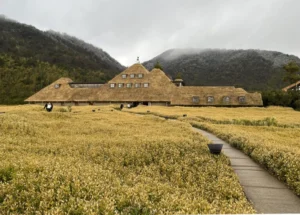
La Collina changes dramatically with the seasons:
-
Spring: Fresh greenery and blossoms create a soft, pastoral mood
-
Summer: Lush vegetation covers rooftops and hillsides
-
Autumn: Warm colors and clear skies enhance the scenery
-
Winter: Quiet landscapes with occasional snow highlight architectural forms
Seasonal limited-edition sweets are often available, encouraging repeat visits.
Cultural Significance
La Collina represents a modern interpretation of Japanese values:
-
Respect for nature
-
Attention to detail
-
Harmony between tradition and innovation
It demonstrates how commercial spaces in Japan can function as cultural and aesthetic experiences rather than purely transactional environments.
Access
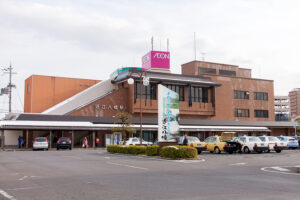
La Collina Ōmihachiman is accessible from major cities in the Kansai region.
From Kyoto:
-
Take the JR Biwako Line to Ōmihachiman Station
-
Transfer to a bus or taxi (approximately 10 minutes)
From Osaka:
-
Take the JR line to Ōmihachiman Station
-
Continue by bus or taxi
Clear signage and frequent transportation make access straightforward.
Visitor Etiquette
-
Stay on designated paths to protect plants
-
Avoid touching rooftops or restricted areas
-
Dispose of trash properly
-
Be considerate when photographing crowded areas
The site is designed for shared enjoyment and environmental preservation.
Facilities
-
Café seating areas
-
Restrooms and baby-care facilities
-
Gift packaging services for sweets
-
Barrier-free access in main areas
Large luggage storage is limited, so light travel is recommended.
Nearby Attractions
-
Ōmihachiman canal area and historic merchant district
-
Lake Biwa shoreline
-
Traditional townscapes and cycling routes
La Collina pairs well with a broader exploration of Ōmihachiman’s historical and natural attractions.
Who Should Visit
-
Architecture and design enthusiasts
-
Travelers interested in Japanese sweets
-
Visitors seeking scenic, relaxed destinations
-
Photographers drawn to organic architecture
Why La Collina Ōmihachiman Is Unique
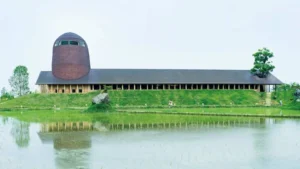
La Collina stands out for its:
-
Integration of architecture and landscape
-
Combination of traditional confectionery with contemporary design
-
Emphasis on sensory experience beyond shopping
It redefines what a sweets destination can be.
Conclusion
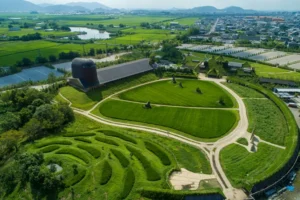
La Collina Ōmihachiman offers international visitors a refined yet approachable window into modern Japanese aesthetics. Through architecture that lives with the land and sweets crafted with seasonal awareness, it creates a place where nature, culture, and taste intersect.
For travelers seeking more than conventional sightseeing, La Collina Ōmihachiman is a memorable destination that embodies Japan’s ability to harmonize tradition with innovation.
Related articles
Official Website
https://www.japatabi.com/en/lake-biwa/spot/17.html
I also share travel information and Japan travel updates on X.
X (formerly Twitter)
