Overview
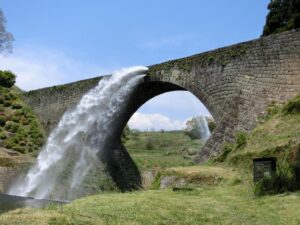
Tsūjun Bridge is one of Japan’s most impressive historic stone aqueduct bridges, located in the rural town of Yamato in Kumamoto Prefecture on the island of Kyushu. Built in the mid-19th century during the late Edo period, the bridge was originally designed to transport irrigation water across a deep valley to support agriculture in the surrounding highlands.
Today, Tsūjun Bridge is both a nationally important cultural property and a popular sightseeing destination. Its distinctive structure, elegant stone arches, and dramatic water-release events attract photographers, history enthusiasts, and travelers seeking off-the-beaten-path experiences in Japan.
The bridge is surrounded by peaceful countryside scenery, making it an excellent destination for visitors interested in traditional engineering, rural landscapes, and seasonal natural beauty.
Historical Background and Engineering Significance
Construction in the Edo Period
Tsūjun Bridge was completed in 1854 under the leadership of local official Yasunosuke Futa, who sought to solve chronic water shortages affecting farmers in the Shiraito Plateau area. The project required advanced planning, precise stone masonry techniques, and community cooperation.
At the time of its construction, the bridge represented a major technological achievement. It demonstrated how local knowledge and ingenuity could overcome challenging geographic conditions.
Function as an Aqueduct
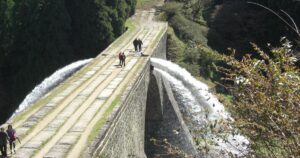
Unlike typical transportation bridges, Tsūjun Bridge was built primarily as an aqueduct. Water from a nearby reservoir was channeled through an internal stone conduit that runs along the top of the structure.
This irrigation system significantly improved agricultural productivity in the region, enabling stable rice cultivation and supporting local livelihoods for generations.
Preservation and Cultural Recognition
Over the years, careful restoration efforts have preserved the bridge’s original form. It has been designated as an Important Cultural Property of Japan and continues to be maintained as both a functional heritage structure and a symbol of regional pride.
Visitors today can observe not only the architectural beauty of the bridge but also the enduring legacy of Edo-period civil engineering.
Water Release Events and Scenic Highlights
Spectacular Water Discharge Demonstrations
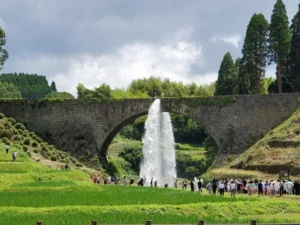
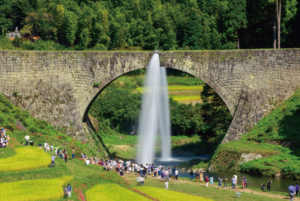
One of the most famous attractions at Tsūjun Bridge is the scheduled water release event. During these demonstrations, large volumes of water are forcefully discharged from the bridge’s stone channels into the valley below.
Originally, this mechanism was used to clear sediment from the irrigation pipes. Today, the dramatic sight of water cascading in powerful streams creates an unforgettable visual spectacle.
Event schedules vary by season, so travelers are advised to check local information in advance.
Seasonal Landscapes
The area surrounding the bridge offers distinctive scenery throughout the year:
-
Spring brings fresh greenery and mild weather
-
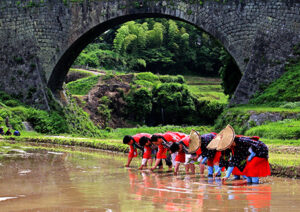
Summer features vibrant rural landscapes and rice fields
-
Autumn is known for colorful foliage in the surrounding hills
-
Winter provides clear air and quiet countryside views
Each season offers different photographic opportunities and travel experiences.
Walking Paths and Observation Points
Designated viewing areas and walking trails allow visitors to appreciate the bridge from multiple angles. Elevated viewpoints provide panoramic perspectives of the stone arches and valley terrain.
Comfortable footwear is recommended due to uneven ground and rural paths.
Visiting Experience and Local Culture
Peaceful Rural Atmosphere
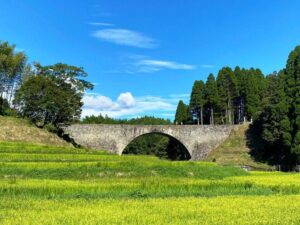
Unlike major urban tourist attractions, Tsūjun Bridge offers a calm and relaxed environment. The surrounding region is characterized by small farming communities, traditional houses, and open landscapes.
Travelers seeking a slower pace of sightseeing often find the destination particularly rewarding.
Local Products and Souvenirs
Nearby shops and roadside stations sell regional specialties such as fresh agricultural produce, rice products, and traditional snacks. Sampling local foods can enhance the cultural experience of visiting the area.
Depending on the season, small festivals or community events may also take place.
Educational Value for Visitors
Informational signs and small exhibits in the vicinity explain the bridge’s history, engineering techniques, and role in regional development. These resources help international visitors better understand the significance of irrigation systems in Japan’s agricultural heritage.
Practical Information and Travel Tips
Access and Transportation
Tsūjun Bridge is located in a rural area, and public transportation options may be limited. Many travelers reach the site by rental car or organized tour from major cities such as Kumamoto.
Driving routes typically pass through scenic mountain landscapes, making the journey itself part of the sightseeing experience.
Best Time to Visit
Planning a visit around a scheduled water release event is highly recommended. Morning or late afternoon visits also provide favorable lighting conditions for photography.
Weekdays are generally quieter, while weekends and holiday periods can attract larger crowds.
Visitor Etiquette and Safety
As a historic structure, parts of the bridge may have restricted access to ensure preservation. Visitors should follow posted guidelines and avoid climbing or entering prohibited areas.
Weather conditions such as rain or strong winds can affect walking paths, so checking forecasts before traveling is advisable.
 A visit to Tsūjun Bridge offers a unique combination of historical insight, engineering appreciation, and scenic rural exploration. The dramatic water discharge events, elegant stone construction, and tranquil countryside setting create a memorable experience for international travelers interested in discovering lesser-known cultural treasures in Japan.
Related articles

Official Website
https://explore-kumamoto.com/tsujunkyo-bridge/
Great Accommodation Site
