Overview
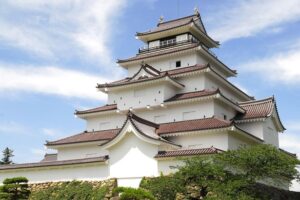
Tsuruga Castle, also known as Aizu-Wakamatsu Castle, is a prominent historical landmark located in Aizuwakamatsu City, Fukushima Prefecture, in northern Japan. The castle is widely recognized for its white walls, distinctive red roof tiles, and central role in one of the most dramatic conflicts of the late Edo period.
Surrounded by a spacious park and defensive moats, Tsuruga Castle stands as a powerful symbol of the Aizu region’s samurai spirit, loyalty, and resilience. For foreign visitors, the castle offers a clear and engaging introduction to Japanese feudal history and the transition from the samurai era to modern Japan.
Historical Background and the Boshin War
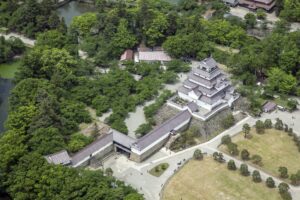
Origins of the Castle
Tsuruga Castle was originally constructed in the late 14th century and later expanded into a full-scale feudal fortress. For centuries, it served as the political and military center of the Aizu domain, ruled by influential samurai families.
The Boshin War and Siege of Aizu
The castle is most famous for its role in the Boshin War (1868–1869), a civil war that marked the end of the Tokugawa shogunate. Aizu’s forces resisted the new imperial government, leading to a prolonged siege of Tsuruga Castle.
Symbol of Samurai Loyalty
Despite overwhelming odds, the defenders of Aizu continued to fight, earning the region a lasting reputation for loyalty and honor. This legacy remains a central theme in the castle’s exhibitions and local identity.
Architecture and Castle Grounds
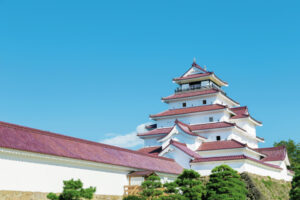
Castle Design and Reconstruction
The current castle tower is a concrete reconstruction completed in 1965, based on historical documents and illustrations. It is notable for using red roof tiles, a feature adapted to withstand heavy snowfall in the region.
Interior Exhibitions
Inside the main keep, museum exhibits display armor, weapons, historical documents, and detailed explanations of the Boshin War. The upper floors offer panoramic views of Aizuwakamatsu and the surrounding mountains.
Moats, Gates, and Park Setting
The castle is surrounded by wide moats, stone walls, and open grounds. Today, the area functions as a public park, blending historical structures with green spaces and walking paths.
Seasonal Beauty and Visitor Experience
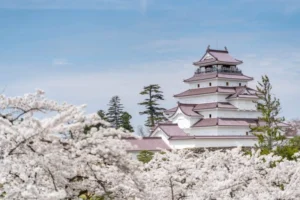
Cherry Blossoms and Autumn Colors
In spring, the castle grounds become one of Aizuwakamatsu’s most popular cherry blossom spots. In autumn, the surrounding trees display vivid red and gold foliage, creating strong visual contrast with the white castle walls.
Winter Scenery
During winter, snow-covered roofs and stone walls give the castle a dramatic appearance and highlight the practicality of its red tiles.
Cultural Events and Festivals
Throughout the year, the castle hosts historical reenactments, festivals, and seasonal events that showcase Aizu’s samurai heritage and traditional culture.
Practical Information for Visitors
Access and Transportation
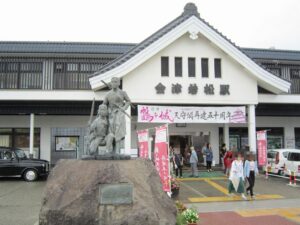
Tsuruga Castle is easily accessible by bus or taxi from Aizuwakamatsu Station. The site is well signposted and often included in local sightseeing routes.
Best Time to Visit
Spring and autumn are especially popular, but the castle offers a different and rewarding atmosphere in every season. Morning visits are recommended for fewer crowds.
Visitor Etiquette and Tips
-
Follow posted rules within the castle museum
-
Photography is generally allowed, but some exhibits may restrict it
-
Wear comfortable footwear for walking around the grounds
-
Allow time to explore both the interior museum and exterior park
Tsuruga Castle provides foreign visitors with a vivid and educational experience of Japan’s samurai past. Its strong connection to the Boshin War, well-presented exhibitions, and scenic setting make it one of the most important historical sites in the Tohoku region.
Related articles

Official Website
https://fukushima.travel/destination/tsurugajo-castle/9
I also share travel information and Japan travel updates on Instagram.
Instagram
