Overview
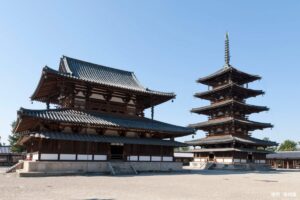
Hōryū-ji is one of Japan’s most important Buddhist temple complexes, located in Ikaruga, Nara Prefecture. Renowned worldwide for its exceptional historical value, Hōryū-ji is home to the world’s oldest surviving wooden buildings and represents the very beginning of Japanese Buddhist architecture.
Designated as a Historic Monuments of Ancient Nara, Hōryū-ji offers international visitors a rare opportunity to experience architecture, art, and religious thought dating back more than 1,300 years.
Historical Background
Hōryū-ji was originally founded in the early 7th century by Prince Shōtoku, a key figure in the introduction and promotion of Buddhism in Japan. Prince Shōtoku played a central role in shaping early Japanese statehood, law, and religious culture.
Although the original temple complex was damaged by fire in the late 7th century, it was rebuilt soon afterward. The surviving structures date primarily from the late 7th to early 8th centuries, making them the oldest extant wooden buildings in the world.
Temple Layout and Structure
Hōryū-ji is divided into two main precincts:
Western Precinct (Sai-in Garan)
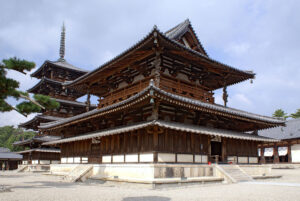
The Western Precinct is the heart of the temple and contains its most famous buildings.
Key structures include:
-
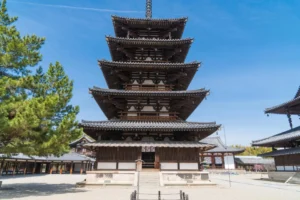
Five-Story Pagoda: One of the oldest pagodas in Japan, symbolizing Buddhist cosmology
-
Main Hall (Kondō): Houses important Buddhist statues and serves as a place of worship
-
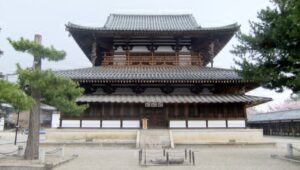
Middle Gate (Chūmon) and cloister corridors forming a sacred enclosure
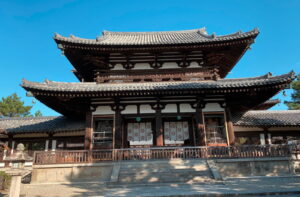
The asymmetrical placement of the pagoda and main hall is a distinctive feature of early Japanese Buddhist architecture.
Eastern Precinct (Tō-in Garan)
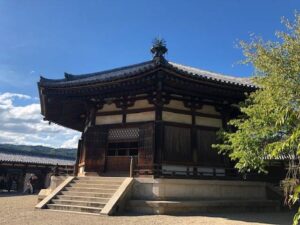
The Eastern Precinct is quieter and more contemplative.
Notable features include:
-
Yumedono (Hall of Dreams), associated with Prince Shōtoku
-
Statue of Kuse Kannon, one of Japan’s most revered Buddhist images
This area emphasizes personal devotion and spiritual reflection.
Architectural Significance
Hōryū-ji’s buildings reflect strong influences from ancient China and Korea while showing early adaptations unique to Japan.
Architectural highlights include:
-
Wooden bracket systems without nails
-
Graceful rooflines with subtle upward curves
-
Earth-toned pigments and natural materials
The survival of these structures demonstrates advanced carpentry techniques and a deep understanding of wood preservation.
Buddhist Art and Treasures
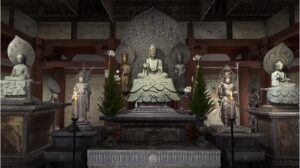
Hōryū-ji houses one of Japan’s most important collections of early Buddhist art.
Highlights include:
-
Gilt bronze statues from the Asuka period
-
Wall paintings depicting Buddhist cosmology
-
Ritual objects and sutras preserved for centuries
Many of these artifacts are displayed in the on-site museum, providing historical context while protecting fragile originals.
Spiritual and Cultural Significance
Hōryū-ji represents:
-
The arrival of Buddhism in Japan
-
The fusion of religion and early state formation
-
The origins of Japanese architectural and artistic traditions
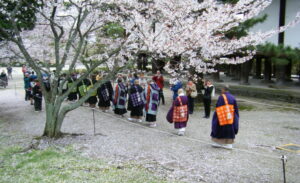
The temple remains an active place of worship, and monks continue to perform rituals that connect the present day with ancient practice.
Walking Experience
Visitors explore Hōryū-ji on foot along gravel paths and wooden walkways.
The experience includes:
-
Open courtyards that frame historic buildings
-
Quiet spaces encouraging reflection
-
Clear sightlines that emphasize architectural harmony
Despite its historical importance, the temple grounds feel calm and spacious.
Seasonal Atmosphere
-
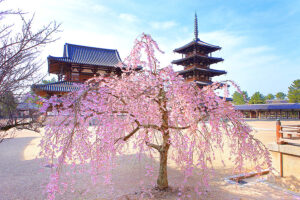
Spring: Cherry blossoms soften the historic structures
-
Summer: Deep greenery contrasts with wooden architecture
-
Autumn: Clear air and autumn foliage enhance the scenery
-
Winter: Crisp light highlights the age and texture of the buildings
Each season offers a different perspective on the temple’s timeless character.
Access

Hōryū-ji is easily accessible from major Kansai cities.
From Kyoto or Osaka:
-
Take the JR Yamatoji Line to Hōryū-ji Station
-
Walk approximately 20 minutes to the temple entrance
The surrounding area is rural and quiet, reinforcing the sense of stepping back in time.
Visitor Etiquette
-
Speak quietly within temple grounds
-
Follow photography rules, especially indoors
-
Do not touch buildings or statues
-
Dress respectfully
As an active religious site, mindful behavior is expected.
Facilities
-
Ticketed entry areas with clear signage
-
On-site museum
-
Restrooms and rest areas
-
English explanations available
The grounds are mostly flat, though some areas have gravel surfaces.
Nearby Attractions
-
Other temples of Ikaruga
-
Nara Park and Tōdai-ji
-
Traditional countryside landscapes
Hōryū-ji pairs well with a broader exploration of ancient Nara.
Who Should Visit
-
Travelers interested in world history
-
Architecture and art enthusiasts
-
Visitors seeking quiet, meaningful cultural experiences
-
First-time visitors to Japan’s ancient capitals
Why Hōryū-ji Is Unique
Hōryū-ji stands apart for its:
-
Unmatched age and preservation
-
Influence on Japanese architecture and religion
-
Direct connection to the origins of Buddhism in Japan
It is not only a historical site, but a cornerstone of Japanese civilization.
Conclusion
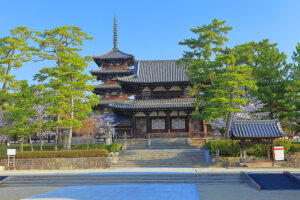
Hōryū-ji offers international visitors a profound encounter with the roots of Japanese culture. Walking among the world’s oldest wooden buildings, visitors experience a continuity of faith, craftsmanship, and thought spanning more than a millennium.
For anyone seeking to understand how Japan’s religious, artistic, and architectural traditions began, Hōryū-ji is an essential and deeply rewarding destination.
Related articles


Official Website
https://www.visitnara.jp/destinations/destination/soni-highland/
I also share travel information and Japan travel updates on X.
X (formerly Twitter)
