
Overview
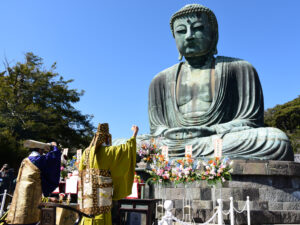
Kōtoku-in is a Buddhist temple located in Kamakura City, Kanagawa Prefecture, best known as the home of the Great Buddha of Kamakura, one of Japan’s most iconic and recognizable religious statues.
Formally named Kōtoku-in Shōjōsen-ji, the temple belongs to the Jōdo-shū (Pure Land Buddhism) sect and attracts millions of visitors each year. The massive bronze Buddha, calmly seated in the open air, symbolizes serenity, resilience, and the spiritual depth of Japanese Buddhism.
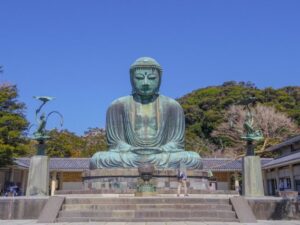
The Great Buddha of Kamakura (Daibutsu)
Basic Facts
-
Official name: Great Buddha of Kamakura
-
Height: approximately 11.3 meters (excluding base)
-
Weight: about 121 tons
-
Material: cast bronze
-
Date of completion: around 1252 during the Kamakura period
The statue depicts Amida Buddha, the central figure of Pure Land Buddhism, representing infinite compassion and salvation.
Historical Background
Originally, the Great Buddha was housed inside a large wooden temple hall. However:
-
Typhoons and earthquakes repeatedly damaged the structure
-
A massive tsunami in the 15th century destroyed the hall entirely
Since then, the Buddha has stood outdoors for over 500 years, enduring natural disasters and becoming a symbol of Japan’s impermanence and resilience.
Design and Expression
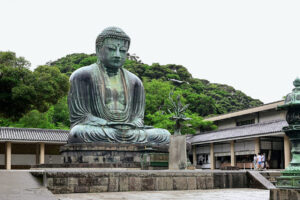
The statue is admired for:
-
Its perfectly balanced proportions
-
A calm, introspective facial expression
-
Downcast eyes that convey meditation and compassion
Unlike more ornate Buddhist statues, the Kamakura Daibutsu reflects the simplicity and realism characteristic of Kamakura-period art.
Interior of the Buddha
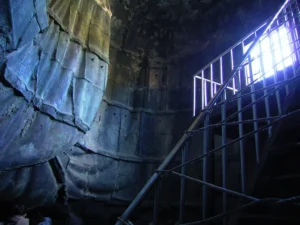
Visitors may enter the hollow interior of the statue for a small additional fee.
Inside, you can observe:
-
Bronze casting techniques used in the 13th century
-
Structural reinforcements added after earthquakes
-
The immense scale from within, offering a rare perspective
Temple Grounds
Kōtoku-in is relatively compact, allowing visitors to focus attention on the Buddha itself.
The grounds include:
-
A traditional entrance gate
-
Stone pathways and seasonal plants
-
Informational signs in multiple languages
Cherry blossoms in spring and autumn foliage enhance the atmosphere, while winter offers clear views and fewer crowds.
Religious and Cultural Significance
Kōtoku-in is not merely a sightseeing spot; it remains an active religious site.
The Great Buddha represents:
-
The Pure Land belief in salvation through faith
-
Buddhist ideals of tranquility and compassion
-
The spiritual legacy of medieval Japan
Many visitors choose to pray quietly or reflect in front of the statue.
Photography Guidelines
Photography is permitted throughout the temple grounds.
Tips:
-
Early morning offers softer light and fewer visitors
-
Wide-angle lenses help capture the statue’s full scale
-
Respect others who are praying or meditating
Tripods may be restricted during busy periods.
Access
From Tokyo
-
Take a JR train from Tokyo Station to Kamakura Station (approximately 1 hour)
-
Transfer to the Enoden Line
-
Get off at Hase Station
-
Walk about 7–10 minutes to Kōtoku-in
The walk passes through a charming neighborhood with small shops and cafes.
Admission and Hours
-
Entrance fee applies
-
Additional fee to enter the interior of the Buddha
-
Open daily, with slightly shorter hours in winter
Exact hours may vary by season, so checking in advance is recommended.
Nearby Attractions
Kōtoku-in can be easily combined with:
-
Hasedera Temple
-
Kamakura beaches
-
Tsurugaoka Hachimangū Shrine
-
Traditional streets around Hase and Kamakura Station
A half-day itinerary covering western Kamakura is popular among visitors.
Best Time to Visit
-
Early morning: Calm atmosphere and fewer crowds
-
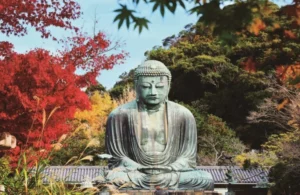
Spring: Cherry blossoms and mild weather
-
Autumn: Colorful foliage and clear skies
Weekends and national holidays can be very busy.
Cultural Etiquette
-
Keep voices low
-
Do not climb on statues or structures
-
Follow posted signs and staff instructions
-
Dress respectfully, as this is a religious site
Who Should Visit
-
First-time visitors to Japan
-
Travelers interested in Buddhism and history
-
Photographers and art lovers
-
Day-trippers from Tokyo seeking cultural depth
Why Kōtoku-in Is Unique
Unlike many temples where sacred figures are hidden inside halls, Kōtoku-in’s Great Buddha stands fully exposed to the sky. This open-air presence creates a powerful sense of connection between nature, time, and spirituality.
The statue’s survival through centuries of natural disasters makes it one of Japan’s strongest symbols of endurance and calm acceptance.
Conclusion
Kōtoku-in Temple and the Great Buddha of Kamakura offer one of the most profound cultural experiences in Japan. Accessible, visually striking, and spiritually resonant, the site leaves a lasting impression on visitors from around the world.
For international travelers seeking to understand Japan’s religious heritage, artistic tradition, and historical resilience, Kōtoku-in is an essential destination.
Related articles

Official Website
I also share travel information and Japan travel updates on X.
X (formerly Twitter)
