Overview
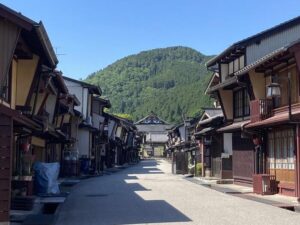
Gujo Hachiman is a historic castle town located in central Gifu Prefecture, renowned for its pristine waterways, traditional streetscapes, and living cultural traditions. Often referred to as the “Town of Water,” Gujo Hachiman offers visitors an immersive experience of rural Japan where history, daily life, and nature are closely intertwined.
Nestled at the confluence of several clear rivers and surrounded by mountains, the town has retained a calm, authentic atmosphere that contrasts with Japan’s larger urban destinations.
Historical Background
Gujo Hachiman developed as a castle town during the early Edo period. In 1559, the warlord Endō Morikazu constructed Gujo Hachiman Castle, establishing the political and cultural foundation of the town.
During the Edo period (1603–1868), Gujo Hachiman prospered as a regional administrative center. Its relative isolation helped preserve traditional customs, town planning, and community practices that continue to shape local life today.
Townscape and Architecture
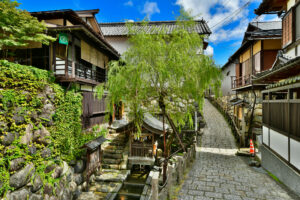
The historic center of Gujo Hachiman is characterized by:
-
Narrow streets following natural waterways
-
Traditional wooden townhouses
-
Stone steps and small bridges connecting neighborhoods
-
Residences with water channels running directly alongside them
Unlike planned grid-style towns, Gujo Hachiman’s layout evolved organically around rivers and springs. Many buildings remain private homes, reinforcing the feeling of a living town rather than a preserved museum district.
Water Culture and Daily Life
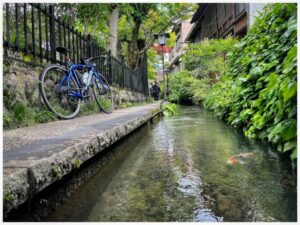
Water defines Gujo Hachiman’s identity.
The town’s clear streams are used for:
-
Washing vegetables and dishes
-
Cooling drinks and foods
-
Fire prevention
-
Seasonal customs
Distinct washing areas known as mizubune are divided into sections for drinking water, food washing, and cleaning, reflecting a long-standing communal respect for shared resources.
This close relationship with water offers visitors insight into sustainable practices developed long before modern infrastructure.
Cultural Significance
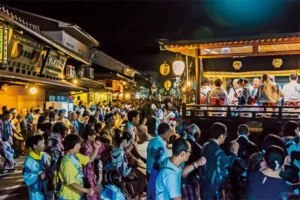
Gujo Hachiman is especially famous for Gujo Odori, one of Japan’s longest-running Bon dance festivals.
Held over more than 30 nights from mid-July to early September, the dance welcomes locals and visitors alike. Participants wear yukata and dance together in the streets, blurring the line between performers and spectators.
The festival highlights:
-
Community participation
-
Continuity of oral tradition
-
The importance of seasonal rhythms in Japanese culture
Gujo Hachiman Castle
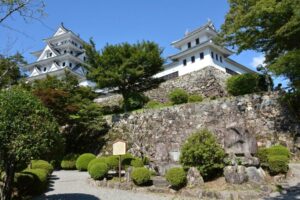
Perched on a mountain overlooking the town, Gujo Hachiman Castle offers panoramic views of the surrounding valleys.
Although the current structure is a reconstructed wooden castle, it remains faithful to traditional design and materials. The castle serves as a symbol of the town and provides historical exhibits related to local governance and daily life in feudal times.
The walk up to the castle passes through forested paths and old stone walls, adding to the historical atmosphere.
Traditional Industries and Crafts
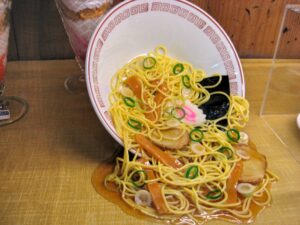
Gujo Hachiman has long been associated with craftsmanship and food culture.
Local specialties include:
-
Replica food samples (shokuhin sampuru), widely used in restaurant displays across Japan
-
Handmade confectionery and traditional sweets
-
Locally brewed sake
Visitors can observe workshops, visit small factories, and purchase high-quality handmade products that reflect regional identity.
Local Food and Dining

Dining in Gujo Hachiman emphasizes seasonal ingredients and regional flavors.
Typical offerings include:
-
Ayu (sweetfish) from local rivers, grilled or salted
-
Simple set meals using mountain vegetables
-
Traditional Japanese sweets enjoyed with tea
Many restaurants operate in renovated historic buildings, allowing visitors to enjoy meals in a traditional setting.
Walking Experience
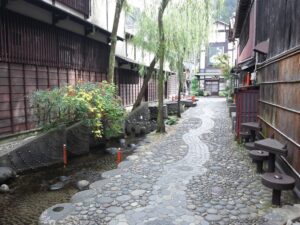
Gujo Hachiman is ideal for slow exploration on foot.
Visitors can:
-
Follow riverside paths through residential areas
-
Wander historic shopping streets
-
Explore hillside neighborhoods connected by stone stairways
The sound of flowing water accompanies most walks, creating a calming and immersive experience.
Seasonal Highlights
-
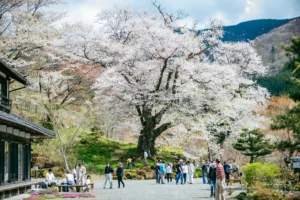
Spring: Cherry blossoms along rivers and castle paths
-
Summer: Lively atmosphere during Gujo Odori and cool evenings by the water
-
Autumn: Colorful foliage in the surrounding mountains
-
Winter: Quiet streets, light snowfall, and a peaceful rural mood
Each season offers a different perspective on the town’s relationship with nature.
Access
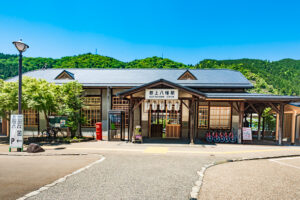
Gujo Hachiman is accessible from major cities in central Japan.
From Nagoya:
-
Take the JR or Meitetsu line to Gifu
-
Transfer to the Nagaragawa Railway to Gujo-Hachiman Station
From the station, the historic center is reachable by bus or taxi.
Visitor Etiquette
-
Respect private homes and waterways
-
Do not wash personal items in communal water areas
-
Keep noise levels low, especially at night
-
Follow local guidance during festivals
Gujo Hachiman is a residential town where daily life continues alongside tourism.
Facilities
-
Tourist information center near the main area
-
Public restrooms available
-
Clear but minimal signage in multiple languages
While some slopes and stairs exist, the main town area is manageable for most visitors.
Nearby Attractions
-
Scenic sections of the Nagaragawa River
-
Rural villages and hiking routes in northern Gifu
-
Traditional towns and onsen areas within day-trip range
Gujo Hachiman pairs well with nature-focused travel itineraries.
Who Should Visit
-
Travelers interested in living traditions
-
Visitors seeking authentic small-town Japan
-
Festival enthusiasts
-
Photographers drawn to water, streetscapes, and seasonal scenery
Why Gujo Hachiman Is Unique
Gujo Hachiman stands out for its:
-
Deep integration of water into daily life
-
Open, participatory cultural traditions
-
Balance between preservation and genuine community living
Rather than showcasing history behind glass, the town allows visitors to experience it as part of everyday life.
Conclusion
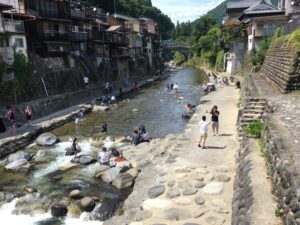
Gujo Hachiman offers international visitors a rare opportunity to experience Japan through water, movement, and community. Its rivers, festivals, and historic streets reveal a way of life shaped by nature and continuity.
For travelers seeking cultural depth, seasonal beauty, and a slower pace, Gujo Hachiman is one of central Japan’s most rewarding destinations.
Related articles
Official Website
http://www.gujohachiman.com/kanko/index_e.html
I also share travel information and Japan travel updates on X.
X (formerly Twitter)
