Overview
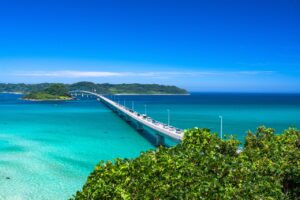
Tsunoshima Bridge is one of Japan’s most visually striking scenic bridges, connecting the mainland of Honshu to the small island of Tsunoshima in Shimonoseki, Yamaguchi Prefecture. Stretching across crystal-clear turquoise waters, the bridge has become an iconic destination for road trips, photography, and coastal sightseeing.
Completed in 2000, the bridge is famous for its long, elegant curve over the sea, offering uninterrupted views of the coastline and surrounding islands. Unlike urban infrastructure, Tsunoshima Bridge is designed to blend with its natural environment, creating a sense of openness and freedom while crossing the ocean.
For international travelers, it is widely regarded as one of Japan’s most beautiful driving routes and a must-visit scenic spot in western Japan.
Scenic Beauty and Natural Landscape
Crystal Clear Waters and Coastal Views
The waters surrounding Tsunoshima Bridge are known for their remarkable clarity and vivid blue-green colors. On sunny days, the sea appears almost tropical, with shifting tones of turquoise and deep blue.
The shallow waters around the bridge enhance visibility, making the entire crossing visually dramatic from both the bridge and nearby viewpoints.
Panoramic Ocean Road Experience
The bridge spans approximately 1,780 meters, creating a long, gentle arc across the sea. Driving or cycling across it provides uninterrupted panoramic views in all directions.
Key visual highlights include:
- Open horizon views of the Sea of Japan
- Small surrounding islands scattered across the water
- Changing light reflections throughout the day
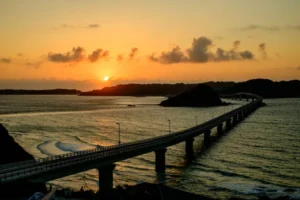
The experience is especially memorable during sunrise and sunset.
Photographic Appeal
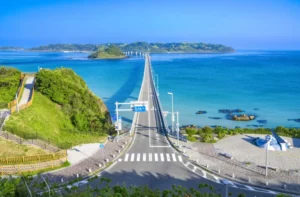
Tsunoshima Bridge is one of Japan’s most photographed coastal landmarks. Popular photo spots include viewpoints on the mainland side, where the bridge’s full curve can be captured in a single frame.
Aerial views and drone photography (where permitted) further emphasize the bridge’s elegant geometry.
Visitor Experience and Activities
Driving and Road Trip Experience
The most common way to experience the bridge is by car. Driving across allows visitors to appreciate the scale and beauty of the structure at a relaxed pace.
The approach roads are also scenic, passing through rural landscapes and coastal areas before reaching the bridge.
Cycling and Walking Views
Cycling across the bridge is another popular activity, especially among adventure travelers. The gentle incline and wide lanes make it accessible for most cyclists.
Walking across is possible but long due to the bridge’s length, so most visitors prefer viewing from designated areas rather than crossing on foot.
Nearby Observation Points
Several viewpoints near the bridge offer excellent photo opportunities without needing to cross it. These spots are ideal for capturing the full structure against the sea.
Some viewpoints include parking areas, small parks, and elevated platforms designed for sightseeing.
Tsunoshima Island and Surrounding Attractions
Tsunoshima Island
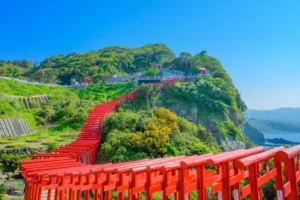
On the far side of the bridge lies Tsunoshima, a small island known for its beaches, lighthouse, and relaxed rural atmosphere.
The island offers:
- White sandy beaches
- Clear swimming waters
- Scenic coastal roads
- Traditional fishing village scenery
It is a peaceful destination ideal for slow travel.
Tsunoshima Lighthouse
One of the island’s highlights is the Tsunoshima Lighthouse, a historic structure that visitors can climb for panoramic views of the surrounding sea and bridge.
The lighthouse area is especially popular during clear weather and sunset hours.
Local Food and Relaxation
Small restaurants and cafés on the island serve fresh seafood and regional dishes. Dining with ocean views enhances the relaxed island atmosphere.
Seafood such as grilled fish and local shellfish is commonly available.
Practical Information and Travel Tips
Access and Transportation
Tsunoshima Bridge is located in western Yamaguchi Prefecture and is best accessed by car. The nearest major city is Shimonoseki, which is connected by train and highway networks.
Public transportation to the bridge area is limited, so rental cars or guided tours are recommended.
Best Time to Visit
The bridge is beautiful year-round, but conditions vary:
- Spring and autumn offer mild weather and clear skies
- Summer provides vibrant blue sea colors
- Winter can be windy but offers dramatic coastal scenery
Early morning and late afternoon are ideal for photography due to softer lighting.
Visitor Considerations
- Wind conditions on the bridge can be strong, so secure loose items
- Parking areas may become busy during peak travel seasons
- Weather can change quickly in coastal regions
Visitors should plan accordingly and check forecasts before traveling.
Tsunoshima Bridge offers a rare combination of engineering elegance and natural beauty. Its sweeping design over vivid blue waters, combined with access to the tranquil island of Tsunoshima, creates one of Japan’s most memorable coastal experiences.
For international travelers seeking scenic drives, photography opportunities, and peaceful island landscapes, this bridge stands out as a highlight of western Japan’s coastal route.
Related articles

Official Website
https://www.visit-jy.com/en/spots/18459
I also share travel information and Japan travel updates on X.
X (formerly Twitter)
