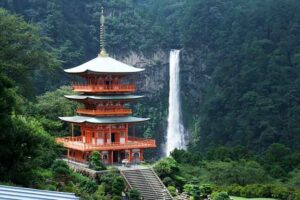
Overview
Kumano Nachi Taisha is one of the three grand shrines that make up the Kumano Sanzan, a sacred pilgrimage network in the mountainous Kii Peninsula of Wakayama Prefecture. Overlooking the Pacific Ocean and surrounded by dense forests, the shrine stands near one of Japan’s most famous waterfalls, Nachi Falls.
The shrine is part of the UNESCO World Heritage listing “Sacred Sites and Pilgrimage Routes in the Kii Mountain Range.” For international visitors, Kumano Nachi Taisha offers a rare combination of Shinto spirituality, dramatic natural scenery, and ancient pilgrimage traditions that have continued for over a thousand years.
Historical and Religious Significance
The Kumano Sanzan
Kumano Nachi Taisha is one of the three central shrines of Kumano Sanzan, alongside Kumano Hongu Taisha and Kumano Hayatama Taisha. Together, they formed the heart of the Kumano faith, a unique blend of Shinto nature worship and Buddhist beliefs.
During the Heian period (794–1185), aristocrats and emperors traveled from Kyoto to Kumano on demanding pilgrimage journeys. These routes later became known as the Kumano Kodo, a network of stone-paved mountain paths still walked today.
Nature Worship and Nachi Falls
The spiritual core of the shrine is closely connected to Nachi Falls, the tallest single-drop waterfall in Japan at approximately 133 meters. Long before formal shrine buildings were constructed, the waterfall itself was worshiped as a sacred deity.
In Shinto belief, powerful natural features such as waterfalls, mountains, and forests are inhabited by kami (divine spirits). Nachi Falls remains a primary object of reverence, and visitors can sense the strong relationship between landscape and spirituality here.
Shinto-Buddhist Syncretism
For centuries, Kumano Nachi Taisha functioned as part of a combined Shinto-Buddhist religious complex. Although Japan officially separated Shinto and Buddhism during the Meiji period, historical elements of this syncretic tradition remain visible in the architecture and rituals.
Nearby stands Seiganto-ji Temple, a Buddhist temple historically integrated with the shrine complex. The iconic vermilion three-story pagoda, set against the backdrop of Nachi Falls, is one of Japan’s most photographed religious landscapes.
Shrine Grounds and Architectural Highlights
Main Shrine Buildings
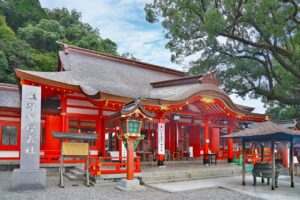 The shrine complex is located halfway up Mount Nachi. After climbing a long stone staircase lined with ancient trees, visitors reach the main shrine structures.
Key features include:
-
Vermilion-painted wooden buildings
-
Traditional curved shrine roofs
-
Decorative white paper streamers (shide) marking sacred spaces
The elevated position provides sweeping views of the surrounding mountains and the Pacific coastline in the distance.
Nachi Falls Viewing Area
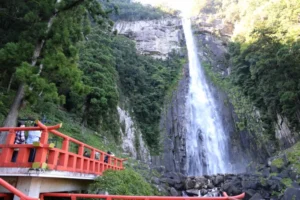 A separate viewing area near the base of Nachi Falls allows visitors to approach the waterfall more closely. Here, a smaller shrine structure stands directly facing the falling water, emphasizing its sacred status.
The sound of the cascading water, combined with mist rising from the basin, creates a powerful sensory experience.
The Daimonzaka Pilgrimage Path
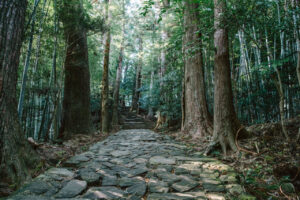 One of the most atmospheric ways to approach the shrine is via Daimonzaka, a section of the Kumano Kodo pilgrimage route. This cobblestone path is lined with towering cedar trees that are several centuries old.
Walking Daimonzaka offers visitors insight into what medieval pilgrims would have experienced on their spiritual journey.
Pilgrimage Experience and Cultural Atmosphere
The Kumano Kodo Pilgrimage Routes
The Kumano Kodo is one of only two UNESCO-listed pilgrimage routes in the world, alongside the Camino de Santiago in Spain. These mountain paths connect the Kumano shrines with other sacred sites across the Kii Peninsula.
Many modern travelers hike portions of the route, combining outdoor adventure with cultural exploration.
Rituals and Worship
Visitors can observe or participate in traditional shrine customs:
-
Purifying hands and mouth at the water basin
-
Offering coins and bowing at the main hall
-
Purchasing protective amulets (omamori)
While tourists are welcome, respectful behavior and quiet appreciation are expected.
Seasonal Scenery
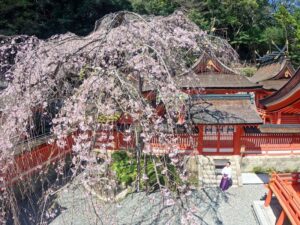 The natural surroundings enhance the shrine’s appeal throughout the year:
-
Spring: Fresh green foliage and blooming flowers
-
Summer: Lush forest and mist from the waterfall
-
Autumn: Vivid red and gold leaves
-
Winter: Occasional frost creating a serene atmosphere
Each season dramatically changes the visual character of the site.
Visitor Information and Travel Planning

Access
Kumano Nachi Taisha is located in Wakayama Prefecture. The nearest major access point is Kii-Katsuura Station, reachable by limited express train from Osaka or Nagoya. From the station, buses connect to Nachi Falls and the shrine entrance.
Because of its mountainous location, travel time from major cities can take several hours. Many visitors stay overnight in the area.
Physical Considerations
Visiting the shrine requires climbing stairs and walking on uneven stone paths. Comfortable walking shoes are strongly recommended. The climb can be physically demanding but is manageable for most visitors at a moderate pace.
Recommended Visit Duration
Allow:
-
2–3 hours to explore the shrine, Nachi Falls, and nearby temple
-
Additional time if walking part of the Kumano Kodo
Nearby Accommodation
The coastal town of Katsuura offers ryokan (traditional inns) and hot spring baths, making it a popular base for exploring the Kumano region.
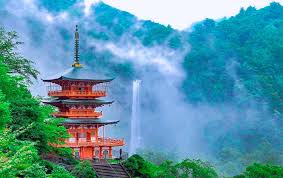 Kumano Nachi Taisha represents one of Japan’s most profound spiritual landscapes, where ancient forest, sacred waterfall, and traditional shrine architecture coexist in harmony. For international travelers seeking an experience beyond urban Japan, this site offers a powerful connection to nature, pilgrimage history, and centuries-old religious devotion.
Related articles

Official Website
https://www.tb-kumano.jp/en/kumano-kodo/world-heritage/kumano-nachi-taisha/
I also share travel information and Japan travel updates on X.
X (formerly Twitter)
