What would you do if your credit cards suddenly stopped working overseas?
I actually went through exactly that during a recent trip to Laos and Thailand.
By the end of it, I felt like I had only about “3,000 yen left,” and I even started considering contacting the Japanese Embassy at Don Mueang Airport.
What made the situation truly terrifying was not that
“one credit card stopped working,”
but that
“almost every card I had suddenly became unusable.”
Overseas ATM errors, declined credit card payments, rejected cash advances…
Even with the airport air conditioning running, I could not stop sweating.
I genuinely thought,
“I might not even be able to make it home.”
In the end, what saved me was Revolut — a financial app widely used for international transfers and overseas ATM withdrawals — along with emergency money sent by a friend.
In this article, I want to share my real experience with an “overseas travel money disaster” as honestly and realistically as possible.
If you travel abroad, this is something I truly hope you will read.
The “Last Lifeline” for International Travelers
Prepare the Next-Generation App “Revolut” for Overseas ATM Errors and Credit Card Problems
When your credit cards suddenly stop working overseas and ATMs refuse to dispense cash, the app that saved me from that nightmare was Revolut.
You can instantly add funds from your smartphone, and the foreign exchange fees are extremely low. Simply keeping it as a backup card can dramatically improve your peace of mind while traveling abroad.
Registration can be completed from your smartphone in just a few minutes.
No annual fee or maintenance cost.
Don’t wait until you regret not setting it up earlier.
It All Started With a Sketchy ATM in Laos
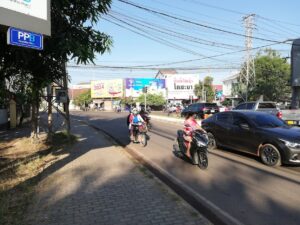
The first sign that something was wrong happened in Vientiane.
After casually paying for breakfast with my credit card, I asked the staff,
“Is there an ATM nearby?”
They pointed me toward one just down the street, so I headed over.
It was not something I carefully searched for on Google Maps.
It was more like,
“There’s probably only one around here anyway.”
But the moment I saw the ATM, I immediately thought,
“This looks a little sketchy…”
It was not attached to a bank.
It was one of those standalone ATMs sitting right on the side of the road.
An old Southeast Asian-style machine that looked heavily worn and noticeably dirty.
Even though it was daytime, the heat was intense, and the sound of motorbikes constantly echoed through the street.
The smell of exhaust fumes hung heavily in the air, making the whole place feel unmistakably local.
Still, at the time, I told myself,
“Well, this is just how things are overseas sometimes.”
I inserted my card.
Then — error.
I do not remember the exact message, but it said something along the lines of:
“Unable to process transaction.”
Even then, I did not think too much of it.
I figured,
“Maybe this ATM is just not working properly.”
“Another card should work.”
Something like that.
But then the second card failed too.
That was the moment I realized something was seriously wrong.
My Card Was Declined — and I Had a Bad Feeling
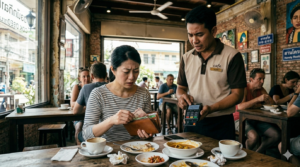
Later, I stopped at another restaurant for a meal.
It was not really a tourist-focused place — more like an ordinary local restaurant.
When I tried to pay with my credit card, the payment failed again.
The staff tried several times, but the card still would not go through.
That was the first moment I thought,
“Wait… something is wrong.”
Part of me wondered if it was just a machine error, but deep down I had already started thinking,
“Maybe the problem is actually my card.”
I checked my wallet and ended up paying in cash.
I clearly remember thinking,
“Thank goodness I still have cash.”
At that point, though, I was still relatively calm.
I told myself,
“If things get really bad, I’ll probably figure something out once I get to Thailand.”
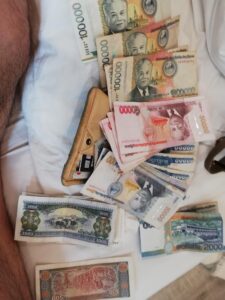
At the time, the exchange rate was roughly 1 USD = around 21,000 Lao kip, so exchanging just about $50 made me feel strangely rich carrying huge stacks of cash.
I Was Down to About $20 in Luang Prabang

I stayed in Vientiane for four days before taking the Laos-China Railway to Luang Prabang.
At that point, I still had enough cash to comfortably pay for the high-speed train ticket.
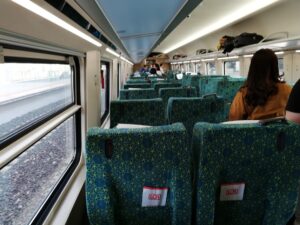
I then spent another four days in Luang Prabang.
On my final day there, I checked my wallet.
As I counted the remaining bills one by one, I suddenly realized,
“Wait… is this really all I have left?”
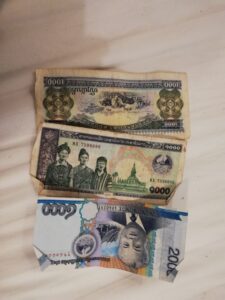
That feeling of being “financially comfortable” in Laos disappears surprisingly quickly once you stay for several days.
All I had left was some Japanese yen, about 4,000 kip, and a small amount of US dollars.
4,000 kip was worth only about $0.20.
Mentally, though, it honestly felt like I had only around $20 left.
By that point, I had even started hesitating before buying bottled water.
When you travel overseas, the small expenses never stop.
Water, food, SIM cards, transportation — the costs slowly keep adding up.
And that was when the fear really hit me:
“Twenty dollars disappears fast.”
On my final day in Laos, I spent hours searching on my phone for things like:
- overseas ATM error
- Thailand ATM cash advance not working
- credit card not working overseas
- Revolut ATM withdrawal
Even then, though, part of me still hoped things would somehow work out.
“Maybe the ATMs in Thailand will work.”
“Surely the airport ATMs will be okay.”
At a small shop inside Luang Prabang International Airport, something that normally cost around 8,000 kip (about $0.40) suddenly cost me $1 when I paid in US dollars.
At that point, I honestly had no choice.
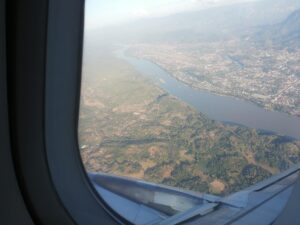
On the flight from Luang Prabang to Don Mueang International Airport, I spent almost the entire flight silently praying.
Knowing Flight Prices in Advance Matters Too
When traveling overseas, unexpected schedule changes or extra hotel nights can happen at any time. In situations like that, being able to quickly check flight prices becomes incredibly important.
I Felt True Despair at Don Mueang Airport
At that moment, for the first time, I genuinely thought,
“I might not be able to make it home.”
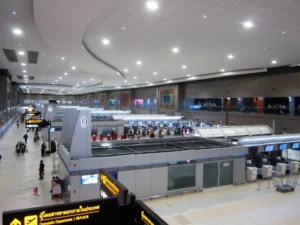
I had finally arrived at Don Mueang International Airport.
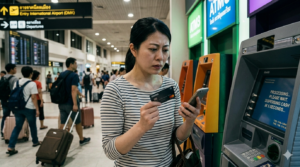
When I saw the ATMs inside the airport, I honestly thought,
“Surely one of these has to work.”
But then—
another error.
“Wait… what?”
“Why?”
“So it was not just Laos?”
My mind went completely blank.
I walked over to another ATM.
Failed again.
Then another one.
Another error.
I spent what felt like forever wandering around the airport.
I kept staring at my phone, searching for ATM signs while practically speed-walking through the terminal.
Meanwhile, everyone around me was simply enjoying their trip.
Families.
Tourists.
Couples.
Everyone else casually moved through the airport while I was mentally panicking over the possibility of running out of money.
That feeling was honestly unbearable.
More than anything, it was emotionally exhausting watching
“other people use ATMs without any problems.”
Even though the airport air conditioning was blasting, I could not stop sweating.
My throat had also gone completely dry.
And the scariest thought of all was this:
“If my phone loses signal, I’m done.”
When you are overseas, your smartphone becomes your lifeline.
Without mobile data, you instantly lose access to maps, information, and communication.
At that moment, I seriously started thinking,
“Do I actually need to contact the Japanese embassy…?”
Securing a Safe Place to Stay Is Also Critical During Overseas Trouble
Having a Safe Place to Stay Becomes Critical During Overseas Emergencies
When money problems happen overseas, having “somewhere safe where you can simply rest” suddenly becomes incredibly important. At some point, you genuinely start thinking, “I just want to find somewhere safe to stay tonight.” Being able to quickly search for hotels near the airport can make a huge difference in situations like this.
*Useful as an emergency option during late-night arrivals or unexpected travel trouble.
Revolut Became My Last Hope
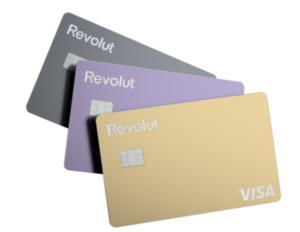
While frantically checking my wallet and banking apps, I suddenly remembered:
“Wait… I have Revolut.”
I had actually signed up for the card about two weeks before my trip after hearing,
“It’s useful for overseas travel.”
At the time, I thought,
“Having one extra card might give me some peace of mind.”
I never imagined it would end up becoming my lifeline.
But then another problem appeared.
When I tried transferring money from my bank account to Revolut, I suddenly realized:
“My banking security device is still back in Japan.”
The moment I realized that, I genuinely felt the blood drain from my face.
“I’m done…”
I had finally thought I found a way out, only to realize I could not complete the final verification step.
Even inside the freezing airport, I could not stop sweating.
The sense of hopelessness was overwhelming.
A Friend’s Money Transfer Saved Me
At that moment, I remembered a friend back in Fukuoka who knows Thailand extremely well.
Before the trip, I had told him I would be traveling there.
Completely panicking, I called him and said:
“The ATMs keep rejecting my cards.”
“I really need help.”
The time it took for him to answer felt unbearably long.
I honestly thought,
“If he’s asleep, I might actually be screwed.”
The moment he picked up, I felt genuine relief.
First, he sent me around $20 as a small test transfer.
I did not want to ask for a large amount right away, and honestly, I first needed to confirm whether the ATM would even work.
The transfer took about 10 minutes to arrive.
But mentally, it felt more like an hour.
I kept pacing around the ATM area while checking my phone over and over again.
Finally, the transfer showed up.
I inserted the Revolut card into the ATM.
Entered the PIN.
But the first attempt failed.
Later, I discovered through the app history that I had simply entered the wrong PIN.
But at the time, I had no idea why it failed.
“It’s over.”
That was honestly what went through my mind.
My hands were completely drenched in sweat.
Then I carefully entered the PIN again.
From inside the ATM, I heard:
“Click-click-click-click…”
At that exact moment, I knew.
“It’s working.”
It was probably the most comforting sound I have ever heard in my life.
Then the ATM finally dispensed 300 baht.
The moment I saw the cash, my entire body relaxed.
I genuinely thought,
“I’m going to be okay.”
Later, when I bought a bottle of water, I still remember feeling relieved by something so simple:
“I can buy water normally again.”
In the end, my friend sent me an additional $200 or so, and I was finally able to get through the situation safely.
I truly cannot thank him enough.
What I Learned After Returning to Japan
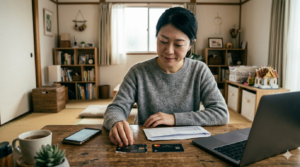
After returning to Japan, I contacted my card company.
They told me there was a strong possibility that the magnetic stripes on my cards had been damaged.
As a result, all of my cards had to be reissued.
To be clear, they never officially confirmed that
“the ATM caused the problem.”
However, in my mind, everything started immediately after using that sketchy ATM, so I still strongly suspect it was related.
Since then, I have become extremely cautious about using ATMs overseas.
If I were to travel abroad again now, I would absolutely make sure to:
- Primarily use ATMs inside airports or banks
- Use ATMs only after seeing someone else successfully use them
- Avoid sketchy-looking ATMs
- Bring my banking security device
- Carry more emergency cash than before (US dollars are incredibly useful overseas)
- Prepare multiple backup cards
I would follow those rules very seriously.
And there is one more thing I learned.
“Always let someone know in advance that you are traveling overseas.”
This is genuinely important.
In my case, I was saved because my friend already knew I was in Thailand.
If I had suddenly called and said,
“I ran out of money overseas. Can you send me around $200?”
even a close friend probably would have been shocked and unsure how to respond.
Overseas Travel Can Turn Into a Nightmare the Moment You Lose Access to Money
Traveling overseas is genuinely exciting and fun.
But the moment
“you lose access to your money,”
everything can instantly turn into a nightmare.
Problems that might still be manageable in Japan feel completely different once you are abroad.
ATM issues and credit cards suddenly stopping working are actually very common travel problems overseas.
This time, I was truly saved by Revolut — and by my friend.
Especially Revolut.
At first, I only thought of it as
“a card that looked convenient for travel.”
But now, honestly, it feels more like
“the card that genuinely saved me.”
If you are planning to travel abroad soon, I truly recommend preparing:
- Multiple credit cards
- Emergency cash
- Safe ATM habits
- Your banking security device
- Revolut
If I could give advice to my past self, the one thing I would say is this:
“Never assume things will somehow work out overseas.”
And finally—
I am truly grateful to the friend from Fukuoka who helped me during that situation.
I also share travel information and Japan travel updates on X.
X (formerly Twitter)
The Scariest Part of Overseas Travel Is Losing Access to Money
Preparing things like Revolut, flight search tools, and hotel booking options in advance can completely change your sense of security while traveling abroad.
