Overview
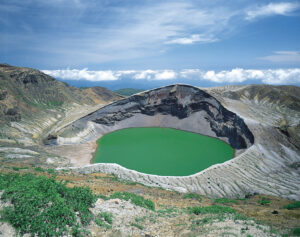
Okama Crater Lake is a striking volcanic crater lake located on the border of Miyagi and Yamagata Prefectures, within the Mount Zaō range. Known for its vivid color changes and dramatic alpine setting, the lake is one of the most visually unique natural attractions in northern Japan.
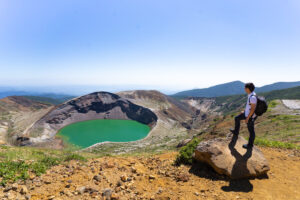
Often referred to as the “Five Color Pond,” Okama Crater Lake displays different shades of green, blue, and turquoise depending on sunlight, weather conditions, and volcanic activity. The lake sits inside a steep volcanic crater, giving it a powerful and otherworldly appearance.
Accessible by scenic mountain roads, Okama is a popular destination for travelers interested in nature, photography, and volcanic landscapes.
Geological Features and Natural Phenomena
Formation of the Crater Lake
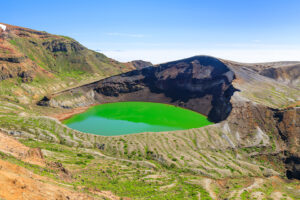
Okama Crater Lake was formed by volcanic eruptions of the Zaō mountain range. The crater itself has steep circular walls, creating a bowl-like shape that contains the lake.
The water has high acidity due to volcanic gases and minerals, which contributes to its unusual coloration and prevents most forms of aquatic life from surviving.
Changing Colors and Visual Effects
One of the most fascinating aspects of the lake is its constantly changing color. Depending on environmental conditions, visitors may observe:
- Emerald green tones under clear skies
- Deep blue hues during certain lighting conditions
- Pale turquoise or milky shades when volcanic minerals are more concentrated
These changes make every visit slightly different, attracting photographers and repeat visitors.
Harsh Alpine Environment
The area around Okama Crater Lake is characterized by strong winds, low temperatures, and limited vegetation. Even in summer, conditions can be cool compared to lower elevations.
The stark, rocky landscape adds to the dramatic and almost surreal atmosphere of the site.
Scenic Viewing Points and Visitor Experience
Observation Areas
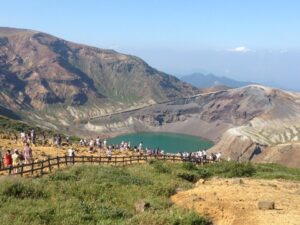
Visitors typically view Okama Crater Lake from designated observation decks located near the crater rim. These viewpoints provide safe and panoramic perspectives of the entire lake and surrounding volcanic terrain.
Short walking paths connect parking areas to the viewpoints, making the site accessible without extensive hiking.
Zao Echo Line and Scenic Drives
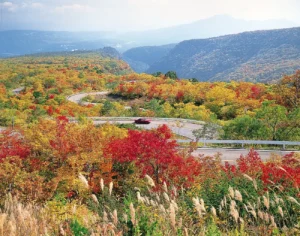
The lake is most commonly accessed via the Zao Echo Line, a scenic mountain road that offers sweeping views of forests, valleys, and volcanic landscapes along the way.
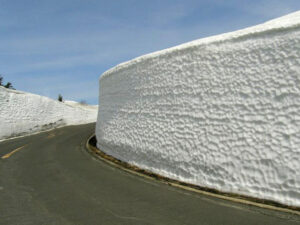
Driving this route is considered part of the overall experience, especially during seasons when the road is lined with snow walls or autumn foliage.
Photography Opportunities
Okama is one of Japan’s most photogenic volcanic sites. Popular photography moments include:
- Early morning light illuminating the crater
- Midday clarity revealing vivid lake colors
- Dramatic cloud formations casting shadows across the landscape
Because weather conditions change rapidly, patience and timing can significantly enhance the visual experience.
Seasonal Highlights and Activities
Spring Snow Walls
In spring, sections of the mountain road leading to Okama may be bordered by high snow walls created by plowed snow. This creates a unique driving experience and attracts visitors interested in seasonal scenery.
Summer and Hiking Season
Summer offers the most stable access to the crater. Mild temperatures and clear skies make it an ideal time for sightseeing and short hikes around the area.
Nearby trails allow visitors to explore additional viewpoints and alpine landscapes.
Autumn Foliage
In autumn, the surrounding mountains display vibrant red, orange, and yellow foliage. The contrast between colorful vegetation and the stark crater enhances the visual appeal.
This is one of the busiest and most popular times to visit.
Winter Conditions
During winter, access to Okama Crater Lake is typically restricted due to heavy snowfall and hazardous road conditions. However, the broader Mount Zaō area becomes a well-known destination for skiing and viewing snow-covered landscapes.
Practical Information and Travel Tips
Access and Transportation
Okama Crater Lake is located at high elevation and is usually reached by car or bus via mountain roads from either Miyagi or Yamagata Prefecture.
Public transportation options may be limited, especially outside peak tourist seasons, so checking schedules in advance is important.
Best Time to Visit
The lake is generally accessible from late spring to autumn, depending on weather and road conditions. Summer and early autumn offer the most reliable access and visibility.
Visitors should check road opening dates and weather forecasts before traveling.
Weather and Safety Considerations
Weather conditions at the crater can change quickly, with sudden fog, strong winds, or temperature drops. Visitors should:
- Wear layered clothing suitable for cooler temperatures
- Bring windproof jackets
- Stay within designated viewing areas
These precautions help ensure a safe and comfortable visit.
 Okama Crater Lake stands out as one of Japan’s most unusual natural landscapes, combining volcanic power with delicate and ever-changing beauty. Its vivid colors, dramatic setting, and accessibility make it a rewarding destination for international travelers seeking a unique and memorable outdoor experience in northern Japan.
Whether visited for photography, scenic drives, or simply to witness the forces of nature, Okama offers a perspective on Japan that is both visually striking and geologically fascinating.
Related articles


I also share travel information and Japan travel updates on X.
X (formerly Twitter)
Recommended Travel Services
