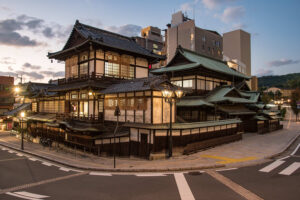
Overview of Dōgo Onsen Honkan
Dōgo Onsen Honkan is one of Japan’s most famous and historically significant hot spring bathhouses. Located in Matsuyama City in Ehime Prefecture on the island of Shikoku, this iconic wooden building is the centerpiece of the Dōgo Onsen district, a traditional hot spring town with a history spanning more than a thousand years.
Dōgo Onsen itself is considered one of the oldest hot springs in Japan, with references appearing in ancient historical records and literature. The current Honkan building, completed in 1894, is a masterpiece of traditional Japanese architecture and has been designated an Important Cultural Property by the Japanese government.
For international visitors, Dōgo Onsen Honkan offers not only a relaxing hot spring experience but also a chance to immerse themselves in Japan’s long-standing bathing culture and architectural heritage.
History and Cultural Importance
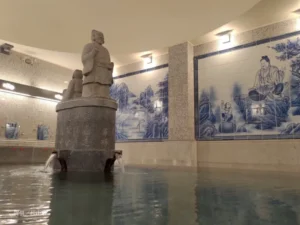
One of Japan’s Oldest Hot Springs
The history of Dōgo Onsen dates back at least 3,000 years according to local legend, though written references appear in historical texts such as the Nihon Shoki, one of Japan’s oldest chronicles from the 8th century.
Throughout Japanese history, emperors, aristocrats, and samurai are said to have visited the hot springs to relax and recover from illness or travel fatigue.
The long-standing reputation of the spring as a healing place helped establish Dōgo Onsen as one of the most prestigious hot spring destinations in the country.
Construction of the Honkan Building
The current Dōgo Onsen Honkan building was constructed in 1894 during the Meiji period. At the time, the design combined traditional wooden bathhouse architecture with modern elements introduced during Japan’s rapid modernization.
The building’s multi-level wooden structure, intricate corridors, and ornate decorations make it one of the most visually distinctive bathhouses in Japan.
The structure has undergone multiple renovations to preserve its historic design while ensuring safety and usability for modern visitors.
Influence on Japanese Culture
Dōgo Onsen Honkan has also influenced Japanese popular culture. Its distinctive architecture is widely believed to have inspired the bathhouse featured in the animated film Spirited Away.
Although the film’s creators have never confirmed a single model for the fictional bathhouse, the resemblance between Dōgo Onsen Honkan and the movie’s setting has attracted many international visitors.
Architecture and Interior Features
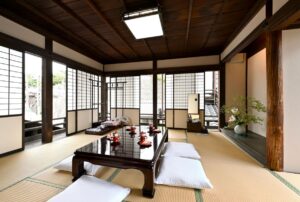
Traditional Wooden Architecture
The building is constructed primarily from wood and rises several stories high. Its complex structure includes multiple roofs, towers, and decorative details that reflect the craftsmanship of the Meiji period.
Key architectural elements include:
-
Wooden balconies and viewing areas
-
Intricate rooflines and tiled surfaces
-
Traditional lanterns and signage
-
Narrow corridors connecting various rooms and baths
The structure resembles a traditional Japanese inn combined with a public bathhouse.
Bathing Areas
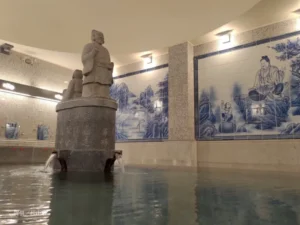
Dōgo Onsen Honkan contains several bathing areas that use the natural hot spring water. The most famous bath is the Kami-no-Yu, which serves as the main public bathing area.
The baths are separated by gender and are designed in a simple yet elegant style with stone pools and traditional interiors.
The hot spring water is known for being mildly alkaline and comfortable for extended soaking.
Private Rooms and Rest Areas
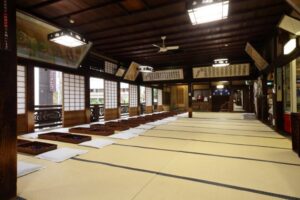
Visitors can choose different bathing plans that include access to tatami rest rooms where guests can relax after bathing.
These rooms feature:
-
Tatami flooring
-
Sliding paper doors
-
Views over the surrounding hot spring town
Staff members often serve tea and traditional sweets in these rooms, recreating the historical experience enjoyed by elite visitors in earlier centuries.
Imperial Bath
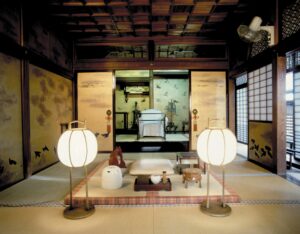
One of the most unique parts of the building is the Yushinden, a special bathing area constructed exclusively for members of the Japanese imperial family.
Although the imperial family rarely uses it today, visitors can view this area through guided tours, which explain its historical significance and architectural design.
Visitor Experience and Practical Information
Bathing Etiquette
Experiencing an onsen bath for the first time can be unfamiliar for many international travelers. Visitors should follow standard Japanese bathing customs:
-
Wash and rinse thoroughly before entering the bath
-
Do not bring towels into the water
-
Enter the bath unclothed, as swimsuits are not permitted
-
Keep noise levels low to maintain a relaxing atmosphere
These practices ensure cleanliness and respect for other guests.
Admission Options
Several ticket options are available depending on the experience visitors want. Basic tickets allow access to the main bath, while higher-tier options include access to tatami rest rooms and tea service.
Guided tours of the imperial bathing area may also be available.
Access

Dōgo Onsen Honkan is located in Matsuyama City. From Matsuyama Station or Matsuyama Castle, visitors can reach the hot spring district via tram in about 20 minutes.
The final stop on the local tram line is Dōgo Onsen Station, which is only a short walk from the bathhouse.
Recommended Visiting Time
Many visitors spend one to two hours bathing and relaxing at the facility. However, exploring the surrounding hot spring town can easily extend the visit to half a day.
The area around the bathhouse contains traditional shops, restaurants, and cafes.
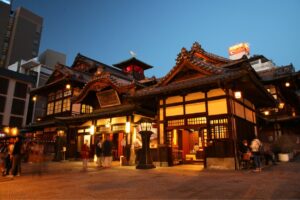
Dōgo Onsen Honkan represents one of the most authentic and historically rich hot spring experiences in Japan. Its elegant wooden architecture, centuries-old bathing traditions, and connection to Japanese cultural history make it a highlight for travelers visiting Shikoku.
For international visitors interested in traditional Japanese culture, architecture, and wellness practices, spending time at this historic bathhouse provides a memorable and deeply immersive experience.
Related articles

Official Website
Great Accommodation Site
