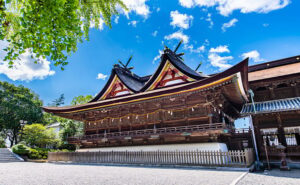
Kibitsu Shrine, located in Okayama City, is one of the most historically important and architecturally distinctive Shinto shrines in western Japan. Known for its unique shrine architecture, long covered corridor, and legends connected to the famous Japanese folktale “Momotaro,” it offers visitors a profound blend of culture, mythology, and spiritual tradition.
Overview
Kibitsu Shrine is the head shrine of all Kibitsu shrines across Japan and is dedicated to Okibitsuhiko-no-Mikoto, a legendary prince believed to be the model for the hero in the Momotaro story. The shrine has a long history dating back over 1,500 years, with many structures rebuilt in the Muromachi period (14th–16th century).
Its most iconic feature is the Kibitsu-zukuri, a distinctive architectural style found nowhere else in Japan, making the main hall and worship hall a nationally designated National Treasure.
Historical Background
-
The shrine sits on the site associated with the ancient Kingdom of Kibi, an influential political power before the rise of the Yamato state.
-
Okibitsuhiko-no-Mikoto is said to have defeated a powerful ogre-like figure named Ura, which later inspired the Japanese legend of Momotaro.
-
The present main hall (honden) and worship hall (haiden) were reconstructed in 1425 under the patronage of shogun Ashikaga Yoshimitsu.
The architecture and layout reflect both ancient Kibi culture and classical Shinto traditions.
Major Highlights
1. The Main Hall (Honden) and Worship Hall (Haiden)
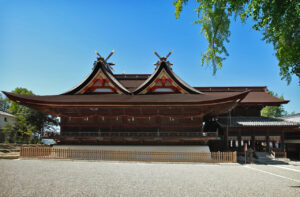
These two structures, connected side-by-side under a continuous roof, form the rare Kibitsu-zukuri style.
Characteristics include:
-
A double-hipped roof design
-
Symmetrical, expanded hall layout
-
Large scale and striking proportions
These buildings are designated as National Treasures due to their uniqueness and excellent preservation.
2. The 360-Meter Covered Corridor (Kairō)
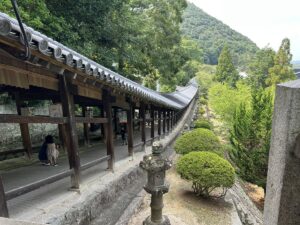
One of the most iconic sights in Kibitsu Shrine is the long, sloping wooden corridor stretching approximately 360 meters.
Features:
-
Beautiful symmetry ideal for photography
-
Serene atmosphere with natural light filtering through
-
A gentle incline leading toward the inner shrine areas
Walking through the corridor provides a distinctly Japanese aesthetic experience, especially during early mornings or late afternoons.
3. The Narukama Shinji (Boiling Pot Oracle Ritual)
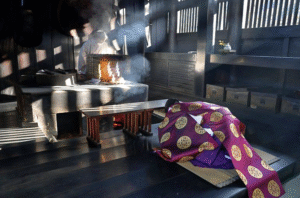
Kibitsu Shrine is famous for the traditional Narukama Ritual, an ancient divination ceremony in which a pot of rice placed over a sacred fire emits mysterious sounds.
According to tradition:
-
The pot’s boiling sound is interpreted as a divine message
-
It may predict fortune, misfortune, or specific outcomes
Visitors can sometimes observe this ritual, although dates vary and may require advanced inquiry.
4. Sub-Shrines and Scenic Spots

The shrine grounds include several smaller shrines, gardens, and historical structures:
-
Kibitsuhiko Shrine (nearby counterpart often visited together)
-
Sacred well believed to be tied to the Ura legend
-
Seasonal flowers and trees, especially plum blossoms and hydrangeas
The entire shrine area offers peaceful walking paths surrounded by forested hills.
Connection to the Momotaro Legend
Kibitsu Shrine is deeply intertwined with the folklore of Momotaro, the peach-born hero. Many scholars believe:
-
The ogre “Ura” in the myth corresponds to a local ruler defeated by Okibitsuhiko-no-Mikoto.
-
The surrounding mountains and rivers served as settings for this ancient story.
Visitors familiar with Momotaro will find many references to the tale in local culture and attractions in Okayama.
Best Time to Visit
The shrine is beautiful year-round:

-
Spring: Plum blossoms and cherry blossoms surrounding the corridors
-
Summer: Lush greenery and cooler breezes along the hillside paths
-
Autumn: Striking foliage along the long corridor and shrine buildings
-
Winter: Quiet, crisp air with minimal crowds
Early morning visits offer particularly atmospheric views.
Access
By Train:
-
From Okayama Station, take the JR Kibi Line to Kibitsu Station (about 15 minutes).
-
The shrine is about a 10–15 minute walk from the station.
By Car:
-
Approximately 20–30 minutes from central Okayama City.
-
Free parking available near the shrine entrance.
Tips for Visitors
-
The long corridor area is popular for photography, especially symmetry shots.
-
The grounds are extensive, so comfortable walking shoes are recommended.
-
Check local information if you want to witness the Narukama oracle ritual.
-
Combine your visit with nearby Kibitsuhiko Shrine and the Kibi Plains Cycling Route for a full day of cultural exploration.
Why You Should Visit

Kibitsu Shrine offers a combination of architectural uniqueness, mythological depth, and serene natural beauty found in few places in Japan. Its National Treasure buildings, atmospheric corridor, and deep connection to the ancient Kibi culture make it an essential destination for travelers seeking an authentic and historically rich Japanese experience.
Related articles

Official Website
https://www.kibitujinja.com/en/
I also share travel information and Japan travel updates on X.
X (formerly Twitter)
