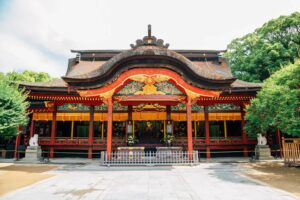
Dazaifu Tenmangu, located in Fukuoka Prefecture, is one of Japan’s most important and historically significant Shinto shrines. It is dedicated to Sugawara no Michizane, a revered scholar, poet, and statesman of the 9th century who is worshipped today as Tenjin, the deity of learning, culture, and the arts.
Known nationwide as a place for academic success, Dazaifu Tenmangu attracts over 10 million visitors annually—students, families, tourists, and pilgrims seeking blessings for studies, career advancement, and personal growth.
The shrine’s grand architecture, sacred gardens, seasonal beauty, and deep cultural traditions make it a must-visit destination in Kyushu.
Overview
Dazaifu Tenmangu stands on the site where Sugawara no Michizane was buried in 903 AD. After his death, legends say that plagues and disasters struck Kyoto, leading people to believe his spirit was angry. Shrines were built to appease him, and he later became venerated as the god of scholarship. This shrine is the head shrine of more than 12,000 Tenmangu shrines across Japan.
The complex includes:
-
Historic halls and gates
-
Bridges symbolizing purification
-
Lush gardens and ponds
-
Cultural museums and a famous teahouse
-
Sacred trees over 1,000 years old
It is both a spiritual center and a cultural heritage site that reflects over 1,100 years of Japanese history.
Key Features
1. Romon Gate
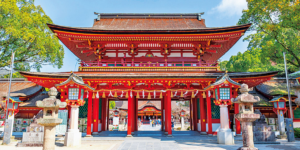
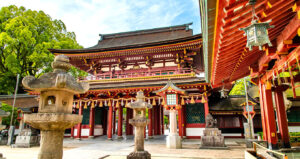
The massive two-story Romon Gate marks the entrance to the inner shrine area. It is one of the shrine’s most recognizable landmarks, rebuilt during the 16th century in beautiful vermilion and white. Passing through this gate symbolizes entering a purified, sacred space.
2. The Sacred Bridges (Taiko-bashi)
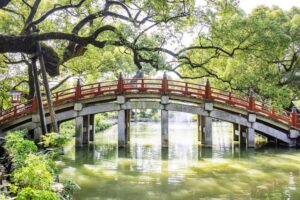
Visitors cross a set of three arched bridges over a pond:
-
The first bridge represents the past
-
The second bridge represents the present
-
The third bridge represents the future
Crossing them is believed to cleanse and renew one’s spirit before approaching the shrine.
3. Main Shrine (Honden) and Worship Hall (Haiden)
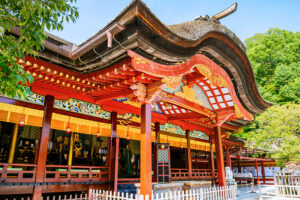
The main building, rebuilt in 1591, is a masterpiece of Momoyama-period architecture. Features include:
-
A sweeping cypress-bark roof
-
Traditional wooden construction
-
Intricate decorative carvings
The Honden enshrines the spirit of Sugawara no Michizane. Visitors pray here for academic success, safe travels, good health, and artistic inspiration.
4. The Legendary Flying Plum Tree (Tobiume)
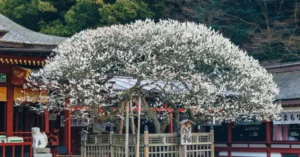
According to legend, a plum tree loved by Michizane in Kyoto flew to Dazaifu overnight to be at his side. The Tobiume still stands next to the main shrine:
-
It is said to bloom earlier than any other tree in the region
-
It is a symbol of loyalty and scholarly dedication
Plum blossoms are an important motif throughout the shrine.
5. Treasure House and Museums
Dazaifu Tenmangu houses a large collection of:
-
Ancient manuscripts and poetry
-
Historic documents related to Michizane
-
Ceremonial artifacts
-
National treasures and cultural properties
Just outside the shrine grounds is the Kyushu National Museum, one of Japan’s most modern and impressive museums focusing on Japanese and Asian cultural connections.
6. Kagura Performances and Rituals
Traditional Shinto dances and ceremonies are performed throughout the year. Seasonal festivals include:
-
New Year celebrations
-
Plum blossom festival (February–March)
-
Spring and autumn Grand Festivals
-
Light-up events and special night openings
These rituals provide insight into living Japanese religious culture.
Nearby Attractions
1. Kyushu National Museum
A major museum with interactive exhibits, historical collections, and special art exhibitions. The futuristic building contrasts with the ancient shrine.
2. Dazaifu Tenmangu Approach (Omotesando Street)
A lively shopping street filled with:
-
Souvenir shops
-
Local crafts
-
Traditional sweets
Its most famous treat is Umegae-mochi, a warm grilled rice cake filled with sweet red bean paste.
3. Komyozenji Temple
A Zen temple known for its stone and moss gardens inspired by Japanese aesthetics. Located just a few minutes’ walk from the shrine.
Transportation and Access
By Train
The easiest route is via the Nishitetsu Railway:
-
From Tenjin (Fukuoka City), take the Nishitetsu Tenjin–Omuta Line to Futsukaichi Station.
-
Transfer to the Nishitetsu Dazaifu Line and ride to Dazaifu Station.
-
The shrine is a short 5-minute walk from the station.
Total travel time: approximately 30–40 minutes from central Fukuoka.
By Bus
Direct buses operate from:
-
Hakata Station
-
Fukuoka Airport
They stop at Dazaifu Station or the shrine entrance.
Best Time to Visit
-
January–March: Plum blossoms and New Year rituals
-
April–May: Fresh greenery and comfortable temperatures
-
Autumn: Vibrant red and gold foliage around the pond and shrine buildings
-
Winter: Peaceful atmosphere and fewer crowds
Weekends and exam season (December–February) are particularly busy.
Tips for Visitors

-
Purchase an ema (wooden prayer plaque) to write wishes for exams or studies.
-
Try Umegae-mochi, a local specialty available fresh on Omotesando Street.
-
Visit early in the morning to enjoy quieter grounds and better photography conditions.
-
Respect the shrine’s etiquette: bow before entering the sacred areas, and follow the cleansing ritual at the purification fountain (temizuya).
-
Combine your visit with the nearby museum for a full cultural experience.
Why You Should Visit
Dazaifu Tenmangu is not only a religious site, but also a cultural treasure that reveals the roots of Japanese scholarship, spirituality, and tradition. From its iconic bridges and sacred plum trees to its vibrant seasonal festivals and surrounding museums, the shrine offers both deep history and living culture.
For international travelers exploring Kyushu, it is an essential destination that captures the spirit of Japan’s past and present.
Related articles



Official Website
I also share travel information and Japan travel updates on X.
X (formerly Twitter)
Recommended Travel Services
