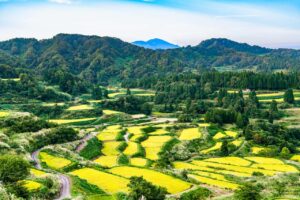
Hoshitoge Rice Terraces are a series of picturesque terraced rice paddies located in Tokamachi City, Niigata Prefecture, in northwestern Japan. Spread across a mountainside, the terraces form a layered pattern that changes dramatically with the seasons and time of day. The name “Hoshitoge” refers to the ridge area where these paddies are situated, offering elevated viewpoints over the landscape.
For foreign visitors, Hoshitoge provides a rare opportunity to witness traditional Japanese agricultural techniques still in use today. Unlike modern large-scale rice farms, these small, irregularly shaped fields follow the natural contours of the mountains, reflecting centuries of adaptation to steep terrain.
Landscape and Seasonal Highlights
Spring: Mirror-Like Reflections
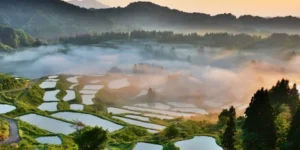
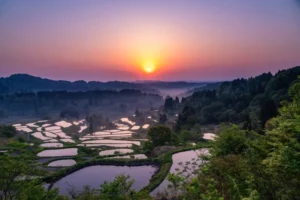
In late spring, after the paddies are filled with water for planting, the terraces become reflective surfaces. At sunrise and sunset, the sky and surrounding mountains are mirrored in the water, creating a dramatic and photogenic scene. Early mornings are particularly popular for photography due to mist rising from the valley.
Summer: Lush Green Layers
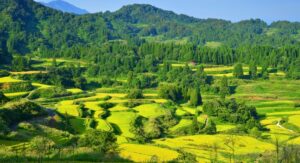
During summer, young rice plants grow into vibrant green fields. The terraces appear as layered bands of color climbing the hillside. The combination of green vegetation and forested mountains creates a strong visual contrast.
Autumn: Golden Harvest
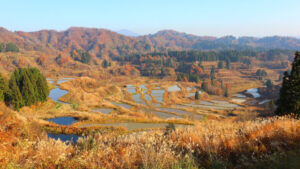
In early autumn, the rice turns golden as it approaches harvest. The terraces take on warm tones, and farmers can sometimes be seen working by hand or with small machinery. This season offers insight into traditional harvesting practices.
Winter: Snow-Covered Scenery
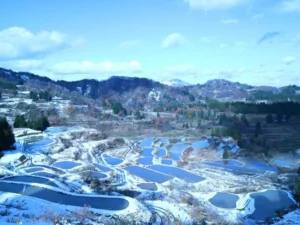
Niigata Prefecture is known for heavy snowfall. In winter, the terraces are often buried under deep snow, transforming the landscape into a white, sculpted terrain. Access may be limited during this period, but the snowy scenery is striking.
Cultural and Agricultural Significance
Traditional Farming Methods
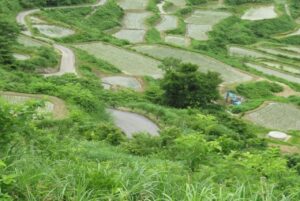
The terraced structure allows rice cultivation in mountainous regions where flat land is scarce. Water flows from upper paddies to lower ones through a carefully managed irrigation system, demonstrating efficient use of natural resources.
Community-Based Agriculture
Many of the fields are maintained by local farmers and community groups. Preservation efforts aim to sustain both agricultural production and cultural heritage, as rural depopulation has made maintenance more challenging in recent decades.
Recognition and Conservation
Hoshitoge Rice Terraces are often highlighted as one of Japan’s notable tanada (terraced rice field) landscapes. They are appreciated not only for their beauty but also for their representation of traditional rural life.
Viewing Points and Photography
Designated Observation Areas
Visitors typically view the terraces from a designated roadside observation deck located above the fields. From this elevated position, the layered structure of the paddies can be fully appreciated.
Sunrise and Mist Conditions
The most dramatic views occur at sunrise, especially when morning mist settles in the valley below. Weather conditions strongly influence visibility and lighting, so flexibility in scheduling is recommended.
Respect for Private Property
The rice paddies are working agricultural fields. Visitors should remain in designated viewing areas and avoid entering the paddies without permission.
Access and Practical Information

Location
Hoshitoge Rice Terraces are located in Tokamachi City, Niigata Prefecture. The area is rural and mountainous, making it less accessible than urban tourist sites.
Transportation
Access is most convenient by car. Public transportation options are limited, and taxis may be necessary from the nearest train station. Roads can be narrow and winding, particularly in winter.
Recommended Visit Duration
Most visitors spend 30 to 60 minutes at the main observation area, though photographers may stay longer to capture changing light conditions.
Best Time to Visit
-
Late May to June: Water-filled paddies reflecting the sky
-
July to August: Bright green rice plants
-
September: Golden harvest scenery
Weather conditions play a major role in the viewing experience. Checking forecasts before visiting is advisable.
Visitor Tips
-
Arrive early for sunrise views
-
Wear appropriate footwear, as mountain roads may be uneven
-
Drive carefully, especially during snowy or rainy conditions
-
Bring drinking water and supplies, as facilities nearby are limited
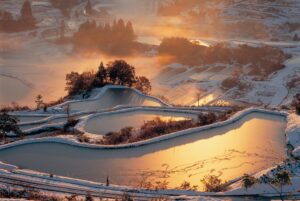
Hoshitoge Rice Terraces offer foreign visitors a peaceful and visually striking introduction to Japan’s rural heritage. The combination of traditional agriculture, mountain scenery, and seasonal transformation makes this destination especially rewarding for travelers interested in landscape photography and cultural authenticity.
Related articles
Official Website
https://enjoyniigata.com/en/spot/10051
I also share travel information and Japan travel updates on X.
X (formerly Twitter)
