Overview
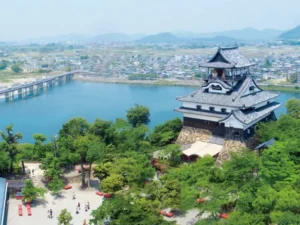
Inuyama Castle is one of Japan’s oldest surviving original castles, located in Inuyama City in Aichi Prefecture. Perched on a hill overlooking the Kiso River, the castle offers both historical significance and scenic views, making it a major cultural attraction for visitors exploring central Japan.
Unlike many Japanese castles that have been reconstructed, Inuyama Castle retains its original wooden main keep (tenshu), dating back to the early 17th century. It is designated as a National Treasure, highlighting its exceptional historical and architectural value.
For international travelers, Inuyama Castle provides a rare opportunity to experience an authentic feudal-era structure in its original form.
History and Historical Significance
Origins in the Sengoku Period
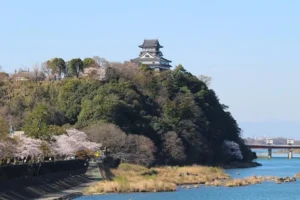
Inuyama Castle was originally constructed in 1537 by Oda Nobuyasu, the uncle of the famous warlord Oda Nobunaga. The castle played an important role during Japan’s Sengoku period, a time of military conflict and territorial expansion.
Its strategic location along the Kiso River made it a key defensive and transportation point.
Role in Early Modern Japan
During the Edo period, the castle came under the control of the Naruse family, who served as feudal lords under the Tokugawa shogunate. The castle remained an important regional stronghold and administrative center.
Unlike many castles that were destroyed or heavily altered, Inuyama Castle survived largely intact through centuries of political and social change.
National Treasure Designation
Inuyama Castle’s main keep is one of only a few original castle keeps in Japan and has been designated a National Treasure. This status reflects its historical authenticity and importance in understanding traditional Japanese castle construction.
Architecture and Interior Features
Original Wooden Keep
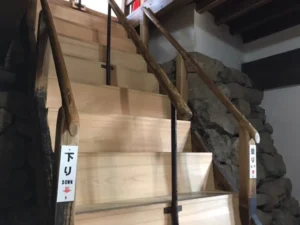
The castle’s main keep is constructed primarily of wood and stone, with multiple levels connected by steep staircases. Visitors can explore the interior, which has been preserved to reflect its original structure.
Key features include:
- Exposed wooden beams and pillars
- Narrow stairways designed for defense
- Minimal decoration, emphasizing functionality
The interior provides insight into the practical design of feudal fortifications.
Defensive Design
The castle incorporates traditional defensive elements such as:
- Elevated position on a hill
- Stone base walls (ishigaki)
- Limited entry points
These features were intended to protect against enemy attacks during times of conflict.
Top Floor Observation Deck
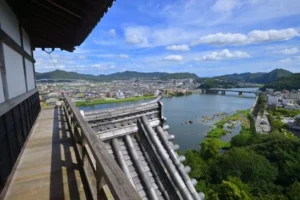
One of the highlights of visiting Inuyama Castle is the top floor, which functions as an open-air observation deck. From here, visitors can enjoy panoramic views of:
- The Kiso River
- Surrounding mountains
- The town of Inuyama
The wooden balcony encircles the top level, offering unobstructed views in all directions.
Visitor Experience and Nearby Attractions
Walking Around the Castle Grounds
The castle grounds include walking paths, gates, and viewpoints that allow visitors to appreciate the structure from different angles. The elevated location enhances the scenic experience.
The surrounding area is well-maintained and suitable for leisurely exploration.
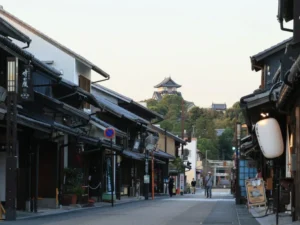
Inuyama Castle Town
At the base of the hill lies a preserved castle town with traditional streets, shops, and eateries. Visitors can explore:
- Local food stalls offering regional specialties
- Souvenir shops with traditional crafts
- Historic buildings reflecting Edo-period design
This area complements the castle visit by providing cultural context and additional activities.
Seasonal Highlights
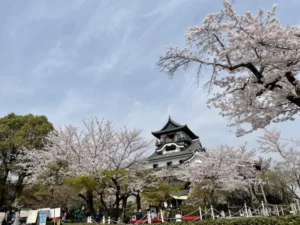
The castle is particularly beautiful during:
- Cherry blossom season in spring
- Autumn foliage season
These periods attract photographers and travelers seeking picturesque landscapes.
Practical Information and Travel Tips

Access and Transportation
Inuyama Castle is accessible from Nagoya, a major transportation hub. Visitors can take trains to Inuyama Station and walk to the castle in approximately 20 minutes.
The route passes through the castle town, making the journey part of the sightseeing experience.
Best Time to Visit
Morning visits are recommended to avoid crowds and enjoy clearer views from the top. Weekdays tend to be quieter than weekends and holidays.
Weather conditions can affect visibility from the observation deck, so checking forecasts is advisable.
Visitor Safety and Etiquette
The interior staircases are steep and narrow, so visitors should proceed carefully. The top floor balcony does not have high barriers, requiring attention when walking around.
As a historic structure, visitors should respect preservation rules and avoid touching restricted areas.
Inuyama Castle stands out as one of Japan’s most authentic and historically preserved castles. Its original wooden structure, strategic location, and panoramic views provide a compelling glimpse into the country’s feudal past.
For international travelers interested in history, architecture, and scenic landscapes, Inuyama Castle offers a rich and memorable experience that combines cultural heritage with natural beauty.
Related articles


Official Website
I also share travel information and Japan travel updates on X.
X (formerly Twitter)
Recommended Travel Services
