Overview
Mount Haguro is one of the three sacred peaks known collectively as the Dewa Sanzan, located in Yamagata Prefecture in northern Japan. Unlike the other two mountains, Mount Haguro is accessible year-round and serves as the spiritual gateway to the Dewa Sanzan tradition, which blends Shinto, Buddhism, and ancient mountain worship.
Rising to a modest elevation compared to Japan’s major peaks, Mount Haguro is less about dramatic height and more about spiritual depth. For centuries, it has been a center of Shugendō, an ascetic mountain practice that emphasizes purification, endurance, and harmony with nature. Today, Mount Haguro offers foreign visitors a rare opportunity to experience Japan’s sacred mountains in a quiet, contemplative setting.
Religious Significance and History
The Dewa Sanzan Belief System
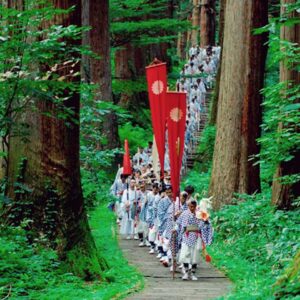
The Dewa Sanzan consists of Mount Haguro, Mount Gassan, and Mount Yudono, each symbolizing a different stage of life. Mount Haguro represents the present world, making it the starting point for pilgrims beginning their spiritual journey.
Shugendō and Mountain Asceticism
Practitioners of Shugendō, known as yamabushi, have trained on Mount Haguro for over a thousand years. Their practices involve physical challenges, ritual purification, and meditation in nature. The mountain’s forests and paths were designed to test both body and spirit.
Sanjin Gōsaiden Shrine
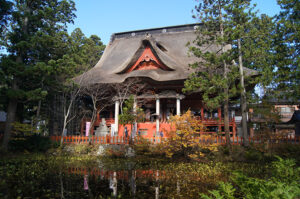
At the summit stands Dewa Sanzan Shrine (Sanjin Gōsaiden), which enshrines the deities of all three sacred mountains. The current structure dates to the early 19th century and is recognized as an Important Cultural Property of Japan.
Sacred Paths and Natural Environment
The Cedar-Lined Stone Stairway
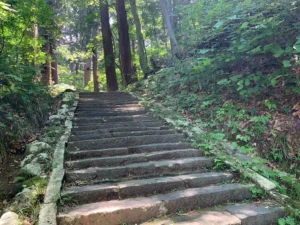
One of Mount Haguro’s most iconic features is its 2,446 stone steps, leading from the base of the mountain to the summit. The path winds through a dense cedar forest, creating a solemn atmosphere that encourages quiet reflection. Walking this route is considered an act of spiritual purification.
Five-Story Pagoda
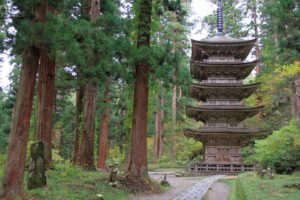
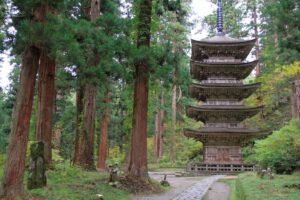
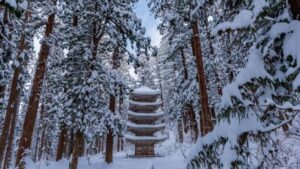
Near the beginning of the trail stands a five-story pagoda, one of the oldest wooden pagodas in the Tohoku region. Set among towering trees, it serves as both a historical landmark and a symbol of harmony between architecture and nature.
Forests, Climate, and Seasonal Mood
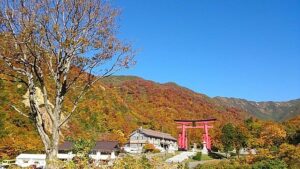
The forest remains cool and shaded in summer, while autumn brings rich colors to the leaves. Winter transforms the mountain into a snowy, silent landscape, adding to its mystical character. Fog and light rain are common and enhance the spiritual ambiance.
Visiting Experience and Practical Information

Access and Transportation
Mount Haguro is accessible from Tsuruoka City by bus or car. The base of the stone stairway and the summit shrine can both be reached depending on visitor preference. The mountain is often included in itineraries exploring the Shonai region.
Best Time to Visit
-
Spring to autumn: Ideal for walking the stone steps and enjoying nature
-
Summer: Cooler temperatures than surrounding lowlands
-
Autumn: Colorful foliage and clear air
-
Winter: Snowy scenery, though walking conditions may be challenging
Early mornings offer the most tranquil experience.
Visitor Etiquette and Tips
-
Walk quietly and respectfully, as the mountain is an active religious site
-
Wear sturdy shoes suitable for stone steps and forest paths
-
Photography is generally allowed, but respect ritual spaces
-
Weather can be damp; waterproof clothing is recommended
Mount Haguro provides foreign visitors with a deeply atmospheric encounter with Japan’s spiritual traditions. Its ancient stone steps, towering cedars, and living religious practices create an experience that goes beyond sightseeing, offering insight into the enduring relationship between nature, faith, and daily life in Japan.
Related articles

Official Website
https://thehiddenjapan.com/mount-haguro/
Great Accommodation Site
I also share travel information and Japan travel updates on Instagram.
Instagram
